
20 Vintage Sewing Notions to Buy & Sell
One of my favorite things to look for when I’m out vintage shopping is sewing notions–not because they’re always so valuable, but because they are delightfully homey and come in so many shapes and sizes. That said, many of them are [happily] valuable and worth learning about to sell!
Table of Contents
INDIVIDUAL SEWING NOTIONS:
1. Baskets & Boxes
2. Books & Pamphlets
3. Buttons
4. Darners
5. Fabric
6. Fasteners
7. Measuring Tapes
8. Miscellaneous
9. Needle Cases
10. Patterns
11. Pin Cushions
12. Ribbon
13. Quilt Pieces
14. Scissors
15. Sewing Kits
16. Straight Pins
17. Thimbles
18. Thread
19. Trade Cards
20. Trim
Where to Buy Sewing Notions
How to Sell Sewing Notions
With that said, here are 20 categories of vintage sewing notions that are worth your time and effort to buy and sell:
1. Baskets & Boxes (for Sewing Supplies)
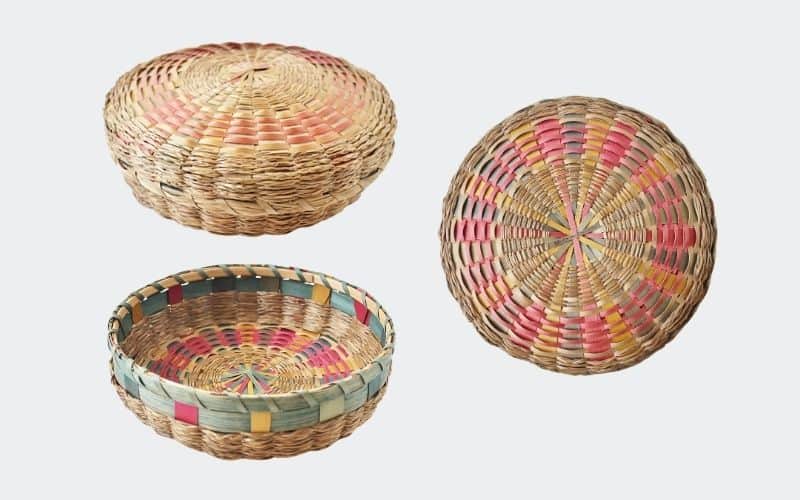
Sewing baskets (or containers) come in many shapes and sizes and are made out of many different materials: wood, plastic, and basket reeds and grasses, for example.
The basket above, made by Northeastern Native Americans, serves as a great example. It’s lovely with its colored ash splints and sweet grass (c. 1920-1950’s). (Value: $30-40, sold on eBay 2025)
It’s worth learning about these baskets since many sellers are unaware of their history and value, so you can often pick them up for reasonable, even low, prices.
Related Article: A Native American Basket Guide
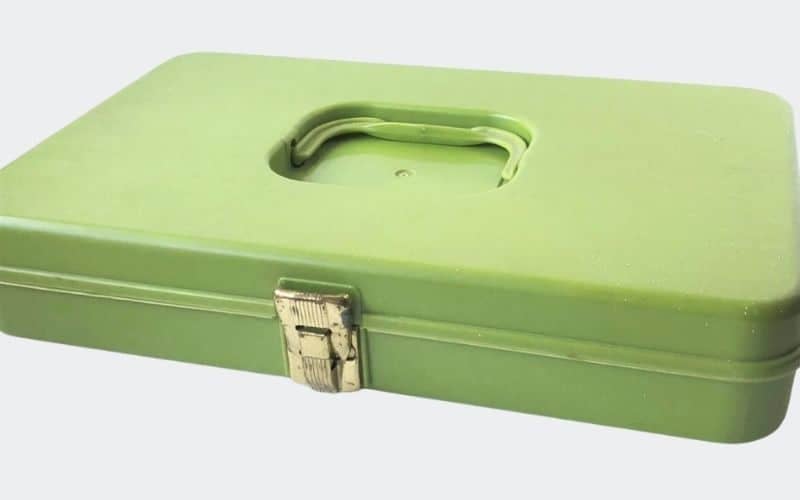
Here’s another example of a collectible sewing box, this green plastic one dates to the 1970’s. (Value: $15-20, sold on FBMP)
2. Books & Pamphlets
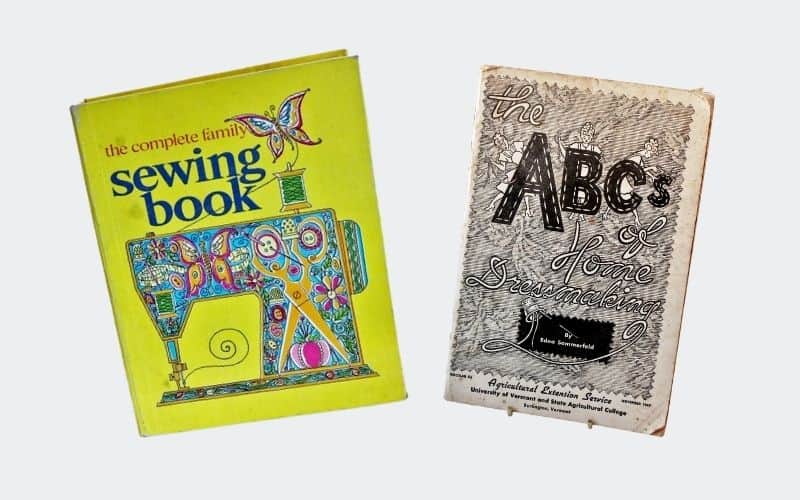
The Complete Family Sewing Book on the left, aimed at beginning sewers, is one of the better known examples of books on the topic. It dates to 1972. (Value: $20-30) Pamphlets like the one on the right, “ABC’s of Home Dressmaking”, are also desirable. (Value: $3-4)
3. Buttons
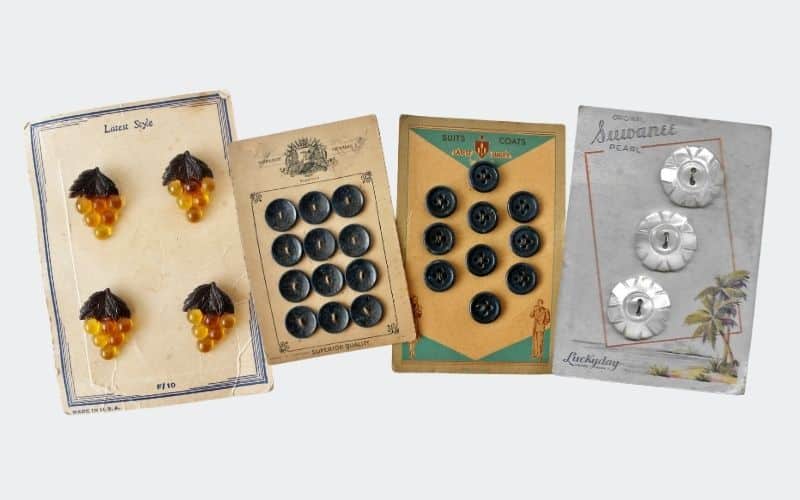
Button collectors abound! Attractive cards with all their buttons in tact are particularly sought after, but loose buttons of all kinds sell well, too, especially rarer examples, like those made of sterling, Bakelite, or handpainted porcelain. See below for ways to sell buttons.
The card on the left featuring plastic yellow grapes with black leaves, probably the most valuable of the four shown, sold on Etsy for $14 in 2025.
Related Articles:
- A Guide to Vintage & Antique Buttons: Part I
- A Guide to Vintage & Antique Buttons: Part II
- Button DIY & Craft Projects
4. Darners
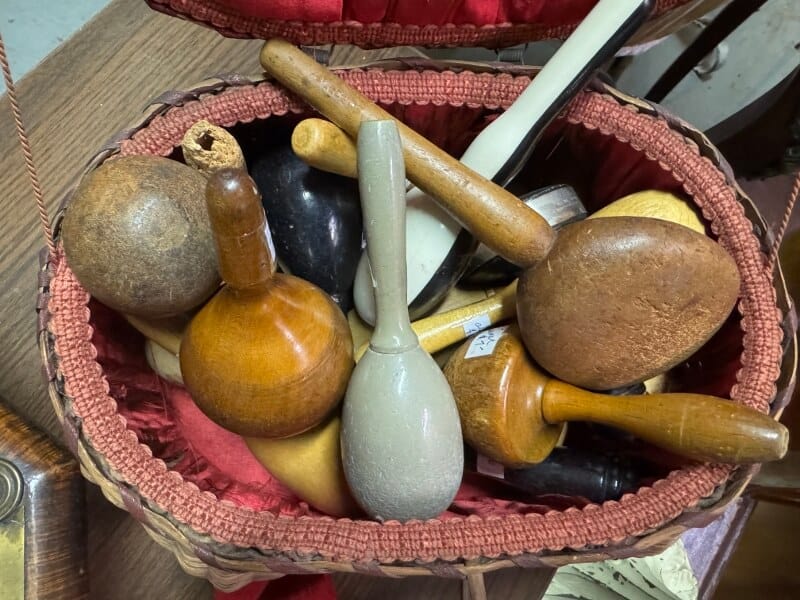
Darners perform a necessary function when it comes to repairing certain pieces of clothing, particularly socks. Usually found in wood, they also come in glass, silver, celluloid, and plastic. I came across this basket filled with a variety of types at an antique mall.
Common ones, like the light blue one generally sell for $8-9. Rarer examples can bring up to $100 or more. Look for an article on darners coming soon!
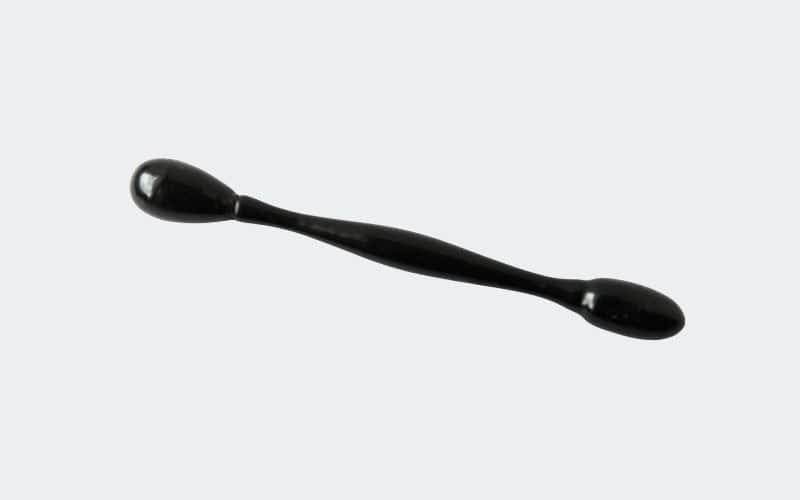
This little darner, one of my favorites, assists with the repair of gloves (c. 1920-40’s). It’s long and thin so it can fit right into each finger of a glove. Value: $20-25
5. Fabric
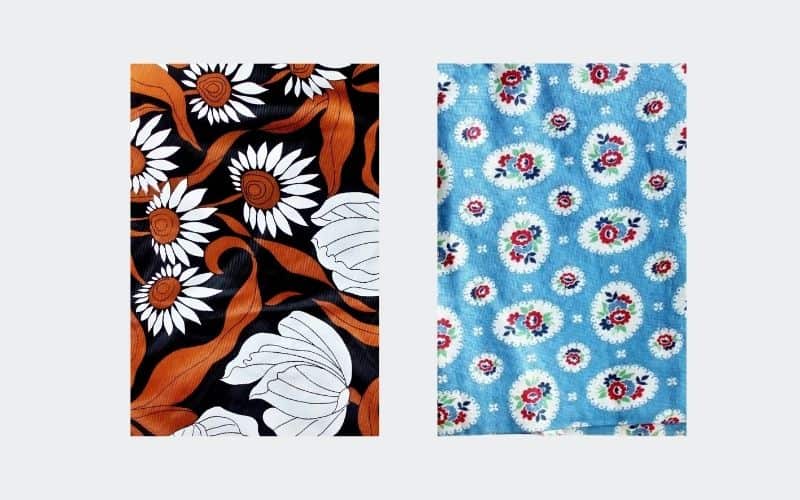
It might come as a surprise, but interesting vintage fabric sells very well, especially on Etsy. On the left (above) is one yard of mod polyester with large white florals on a black background with brown accents (c. 1960’s). (Value: $20-30, sold on Etsy in 2020)
On the right is a large piece of feedsack fabric in aqua blue, white, and red (c. 1930’s). Seamstresses and collectors go mad for feedsack fabric. (Value: $30-40, sold on Etsy in 2024)
Related Article:
6. Fasteners
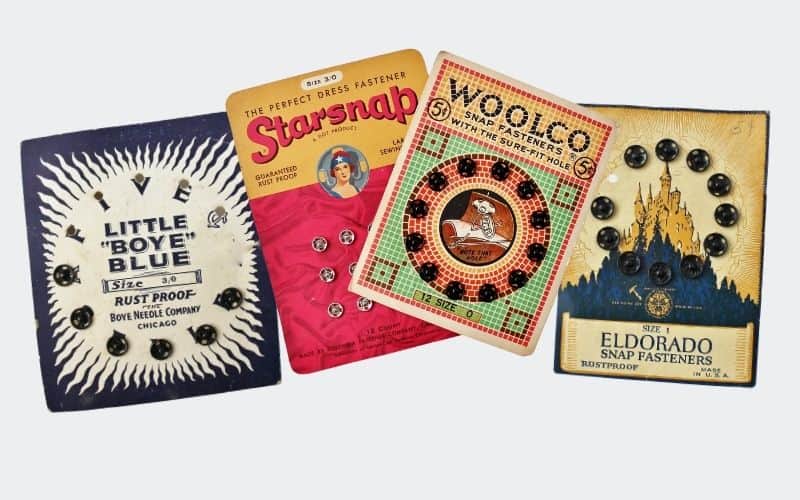
On their own, cards of fastners like these four do not sell for great amounts of money. I typically sell them in collections with other sewing notions. I discuss this process in more detail down below. (Value: $1-2/card)
7. Measuring Tapes
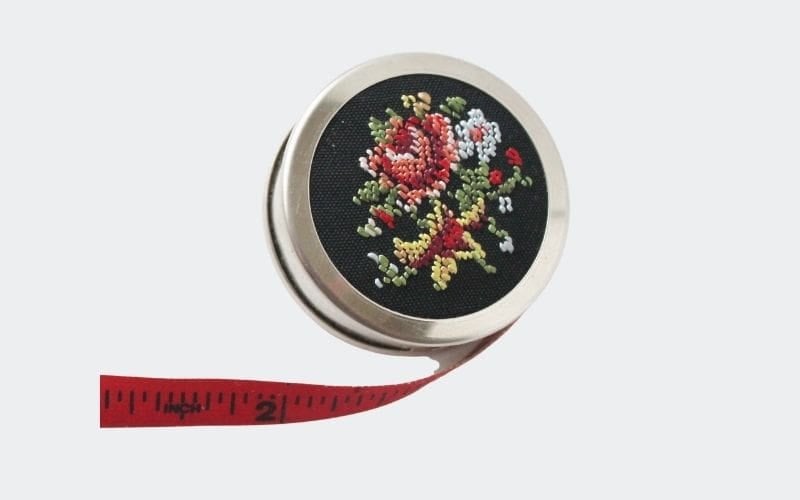
Anytime you can get your hands on a retractable tape measure, I recommend it, especially beautiful examples like this German one with floral petite point decoration (c. 1940’s). (Value: $25-35, sold on Etsy in 2021)
8. Miscellaneous
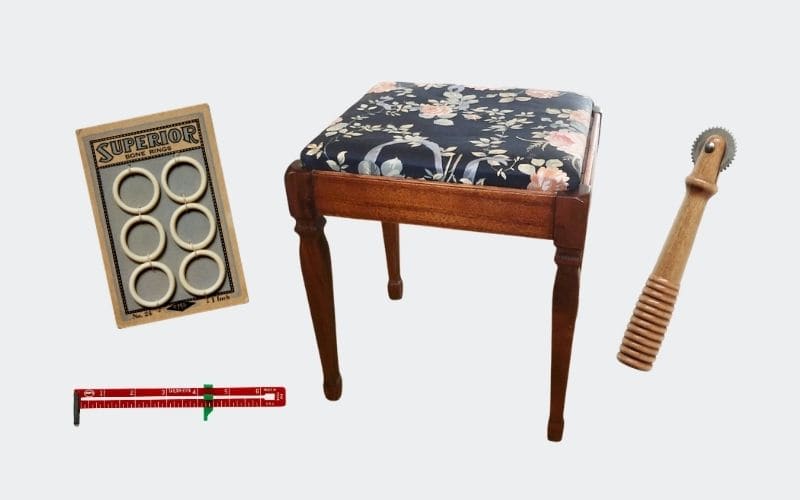
I had to include a miscellaneous category since there are so many other sewing-related items that I like to pick up for resale, including: bone rings (purpose?), measuring instruments, sewing stools, and pattern tracers. (Values: $5-30)
9. Needle Cases
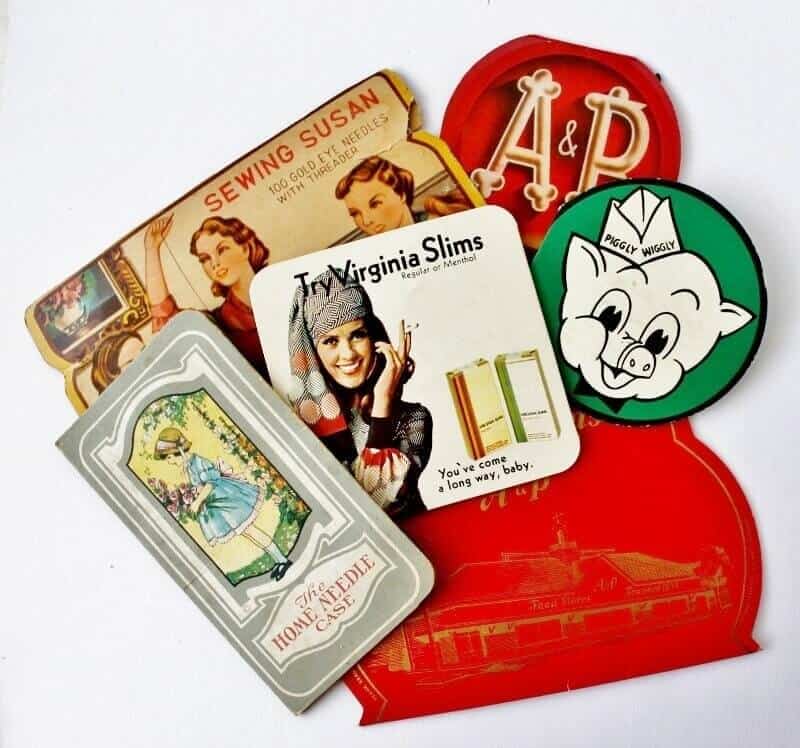
Paper needle cases make for a fascinating collection since they come with so many fun cover illustrations, including advertisements for grocery stores and cigarettes. (Values: $3-8 each)
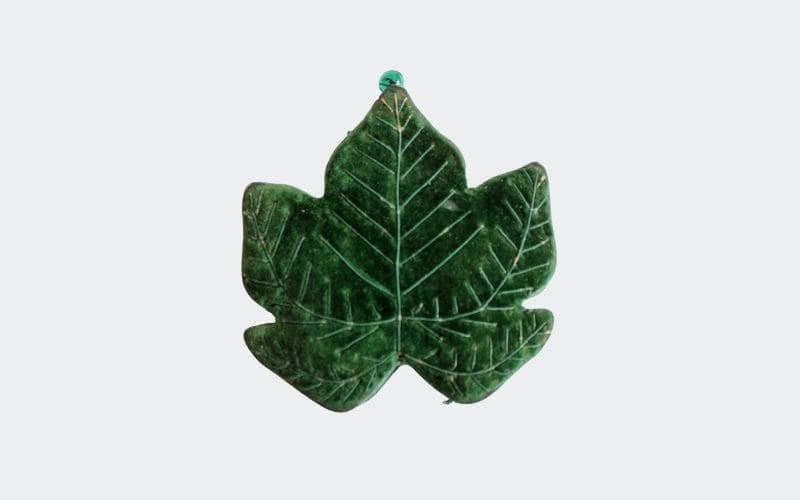
This darling leaf-shaped case made out of green velvet with embroidered “veins” (c. 1920’s) is a real charmer. (Value: $20-30, sold on Etsy in 2025)
10. Patterns

It’s hard to know exactly why some patterns are worth more than others. I simply check sold listings on eBay to get a sense of their saleablilty. Simply put in the pattern number and brand. In general, antique and vintage Vogue patterns tend to do better than others, selling for $10-40.
I pick up any patterns from the 1940’s to 1970’s that are priced a dollar or less. If they aren’t worth $10 or more then I use the images to create the cutest bookmarks ever, which I sell for $5 each.
Related Article:
11. Pin Cushions
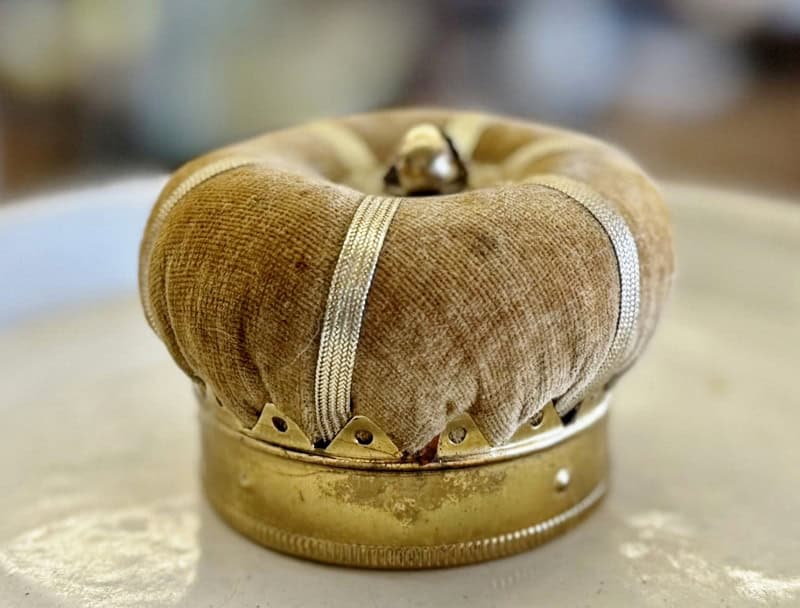
Pin cushions are another absolutely adorable collectible. If you can imagine a shape, chances are a pin cushion has been made in it. You can find them made out of fabric, metal, ceramic, pot metal, silver, wood, and more. I found this crown shaped cushion (c. 1940’s) out in the “wild” priced at $27.
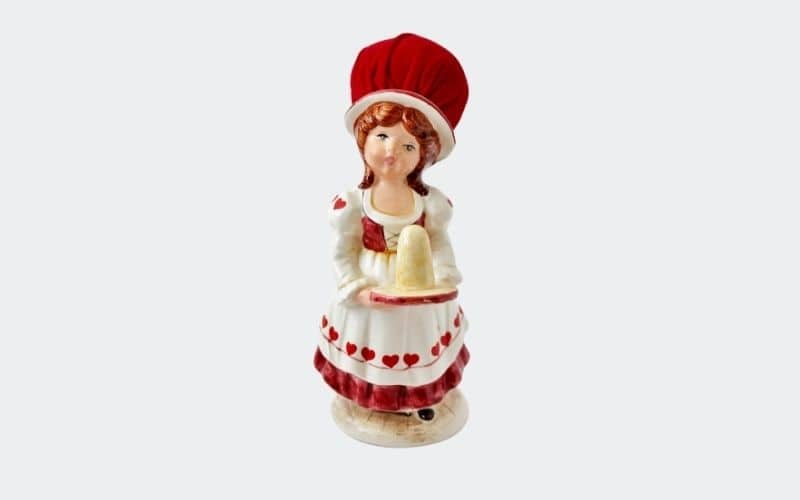
This sweet figural girl with a puffy red velvet hat (that holds pins) is carrying a tray meant for a thimble (c.1980’s). She would have originally come with her own ceramic thimble but it’s missing. (Value: $25-35, available as of July 2026)
Related Article:
12. Ribbon
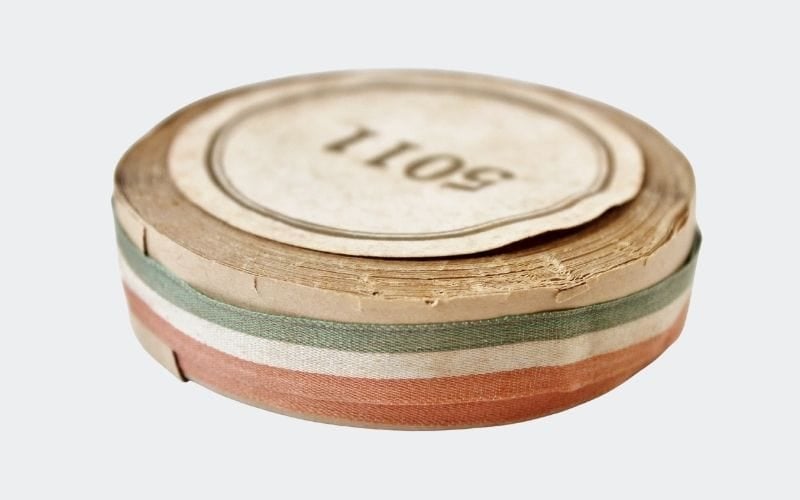
Collectors actively seek out antique ribbon like the roll you see above in silk with a red, white, and blue stripe (c. 1900). You often find fine ribbon wrapped like this with paper rolled along with the ribbon to protect it. (Value: $15-25)
13. Quilt Pieces
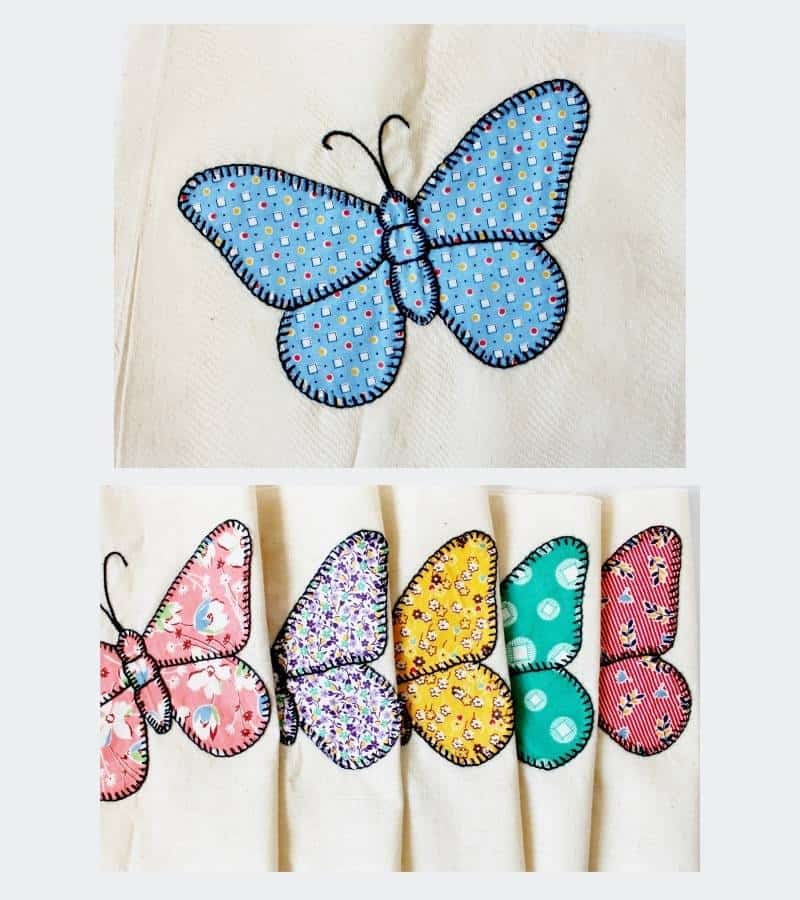
I’ve had a lot of success selling quilt-related pieces, like the appliqued butterflies above (c. 1930’s) made with colorful feedsack fabric. (Value: $35-40 for 16 pieces)
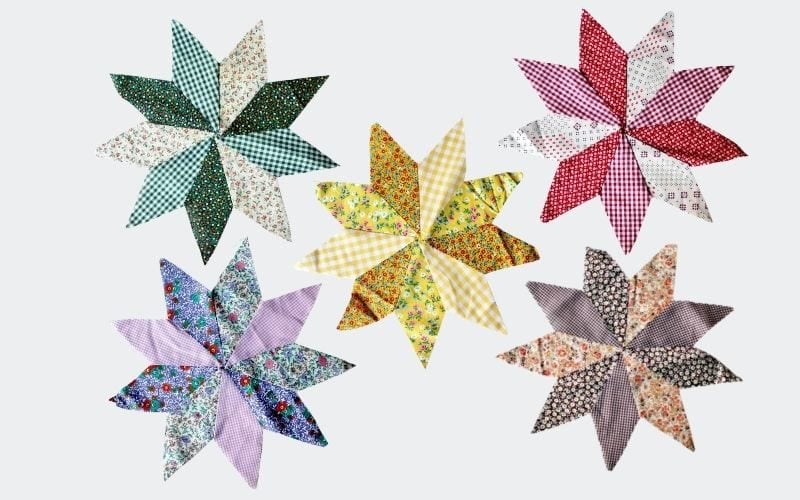
These 8-pointed stars made out of floral calico and pretty gingham (c.1950’s) should sell quickly on Etsy. (Value: $30-40, available as of July 2026).
In addition, buyers look for antique “cutter quilts”, those no longer useful for bedding, along with pieces of old, beat up quilts.
14. Scissors
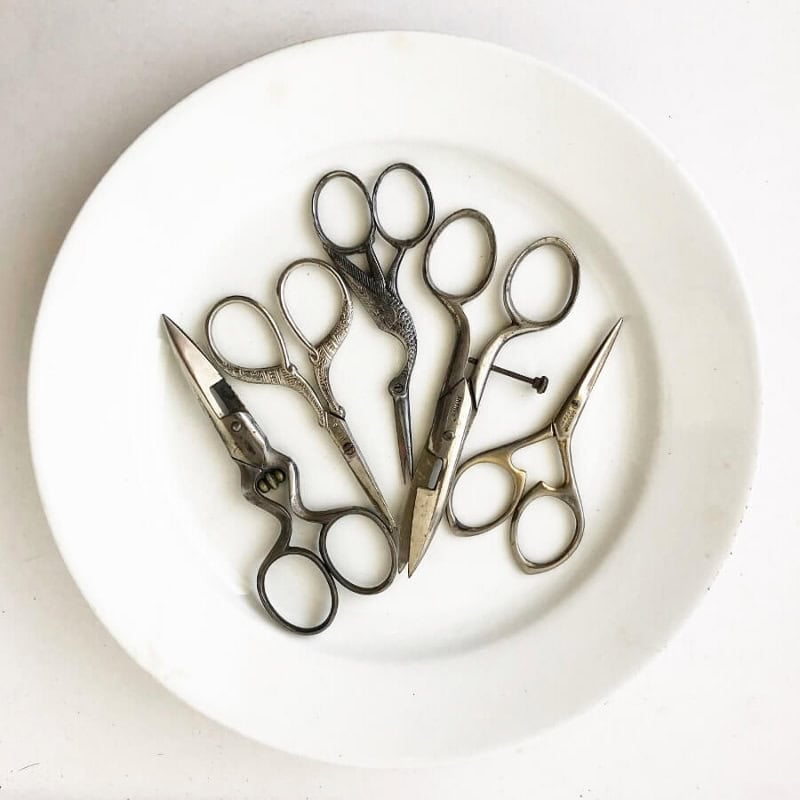
I have a “thing” for scissors and like to have multiple pairs in practically every room in the house! As such, I’ve only recently begun selling them.
Vintage pairs sell from my antique booth in the $10-15 range. I sell more valuable examples, German embroidery sissors, for example, on Etsy. Find creative ways to sell scissors below.
Related Article:
15. Sewing Kits
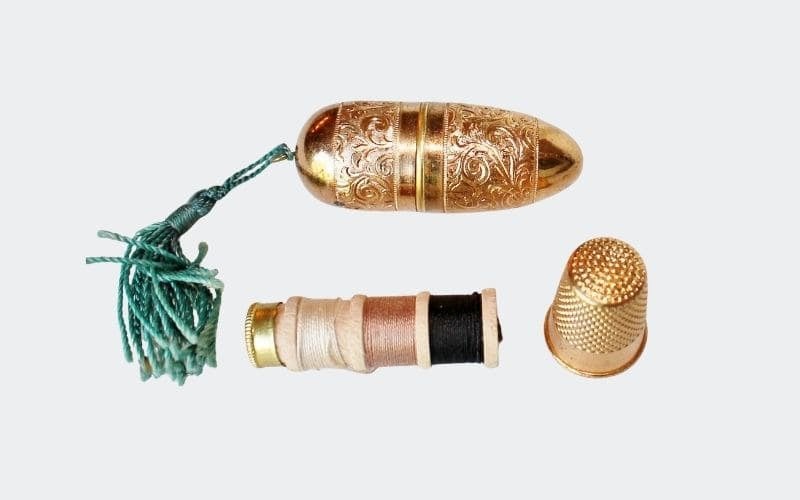
Collectors actively search for sewing kits like this brass, bullet-shaped kit (c. 1920’s) that nicely contains all the necessaries: thread, needles, and a thimble. (Value: $30-40, sold on Etsy)
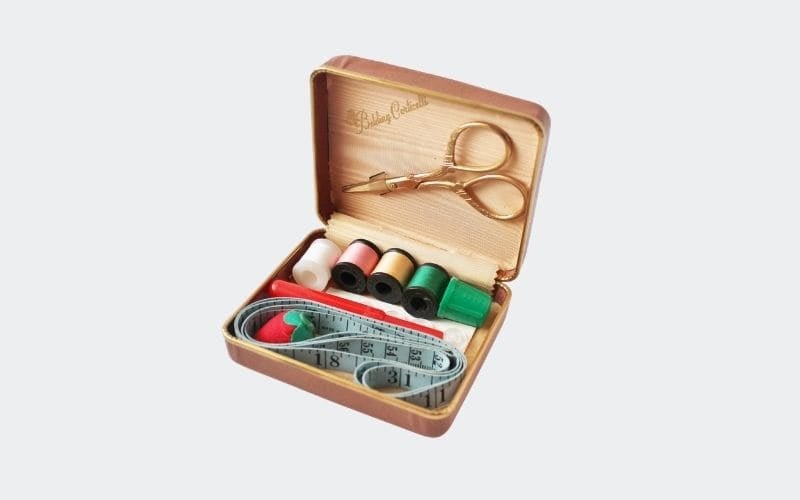
This kit, by Belding Corticelli, a thread manufacturer, contains even more sewing essentials: scissors, thread, thimble, measuring tape, needles, and seam ripper (c. 1960’s). (Value: $25-30, available as of July 2026)
16. Straight Pins
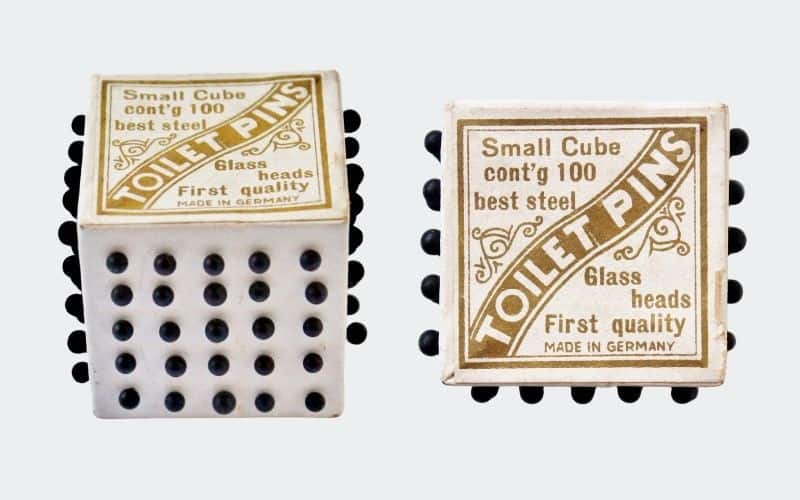
I’m not sure exactly what “toilet pins” are, but these German straight pins with black heads are fascinating embedded on their original cardboard cube. (Value: $10-15) I also buy and sell examples contained inside boxes with cool graphics for $5-10 each.
17. Thimbles
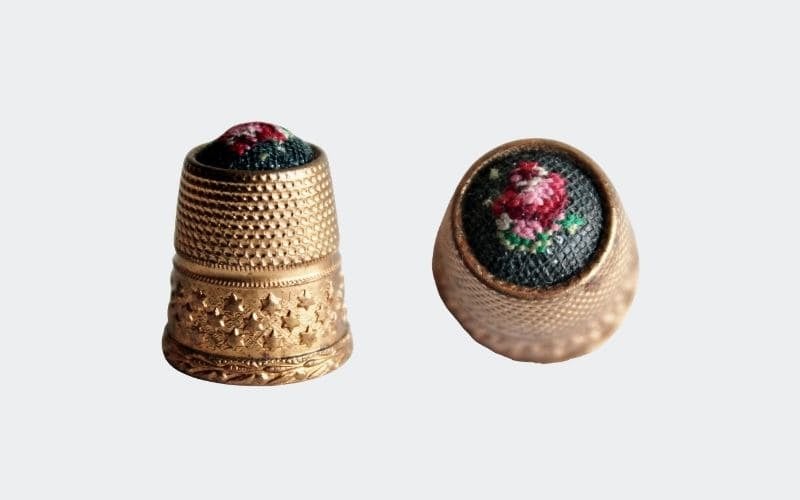
Essential to the hand-sewer, thimbles can be found in metal, sterling silver, gold, plastic, and now-a-days, silicone. This brass example with petite point decoration on the top is adorable (c. 1930-40’s). (Value: $15-20)
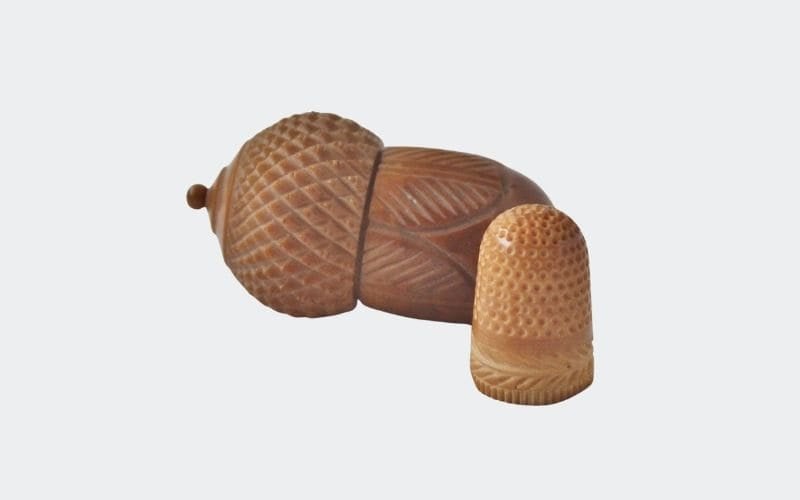
Victorian thimble holders are one of the most valuable of sewing notions. This acorn-shaped holder and thimble, made out of “vegetable ivory” (seeds from South American palm trees) dates to the late 1800’s. (Value: $100-150, sold on eBay)
18. Thread
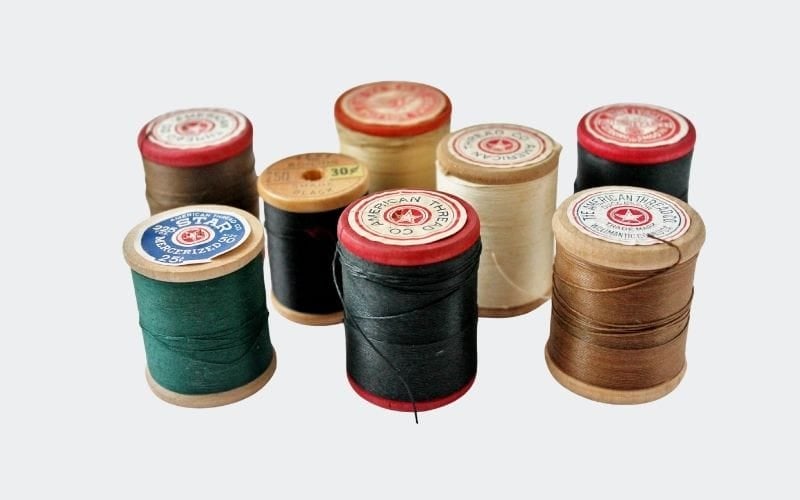
I’m almost irresistibly drawn to thread–both its beautiful colors and its label typography. While individual spools are not all that valuable, I sell them in lots or along with other notions. See ideas for selling thread below.
The large-ish spools you see above, with colorful graphics featuring stars sell for $1-$2 each
Related Article:
19. Trade Cards
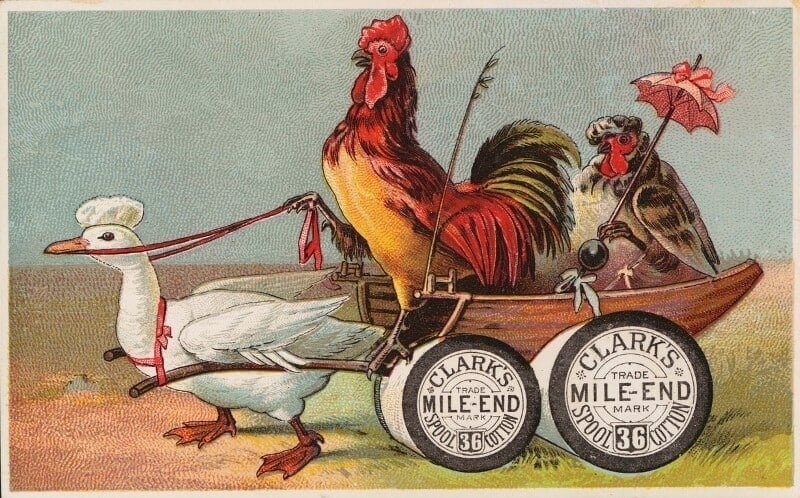
I’ve come across a number of trade cards advertising various vintage notions and sewing machines, but thread manufacturers in particular relied on them to increase sales. This charming example, advertising Clarks, showing a goose pulling a cart with a rooster and hen (c. 1890’s), is cute-as-can-be. (Value: $3-5)
Sell these individually from an antique booth or in small collections, which you could also sell on Etsy. Alternatively, add them to a small collection of other sewing notions to sell as a lot. These can also be easily framed and sold as wall art.
20. Trim
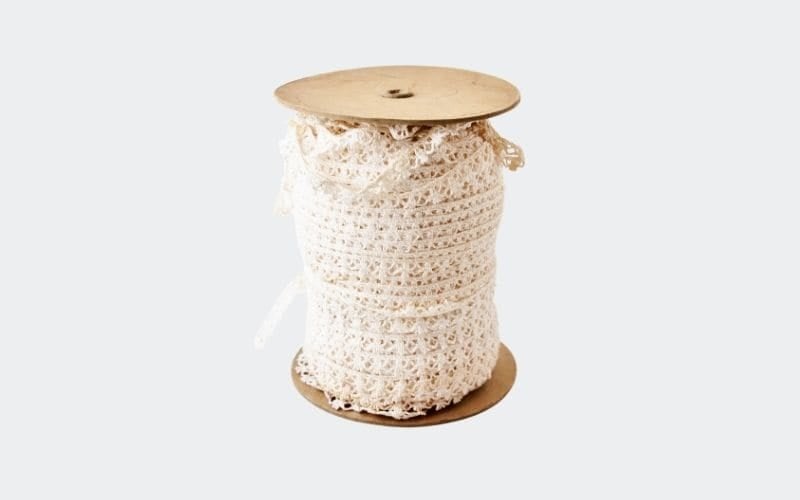
I buy trim, like lace, when it comes in large quantities, like this spool of narrow cotton lace that sold on eBay. (Value: $15-25) I’ve had success selling lower value trim in large lots on Facebook Marketplace.
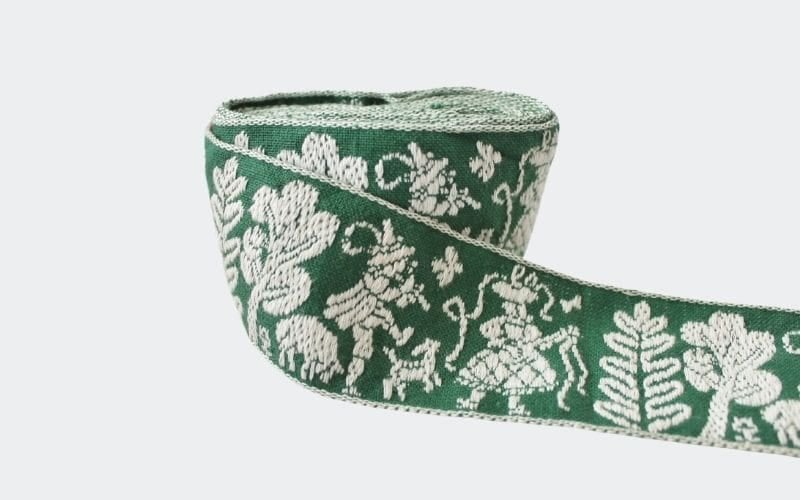
This jacquard trim features what looks like storybook characters–maybe the pied piper and another minstrel of some sort. It’s very attractive at almost 2″ wide and over 3 yards long. (Value: $15-20, available as of July 2026)
Where to Buy Sewing Notions
I find many sewing notions at garage sales and flea markets. Not everyone realizes how valuable they can be. Additionally, I find larger lots at estate sales, often in sewing boxes or baskets, sometimes entire drawers.
I also recommend checking Facebook Marketplace. Use the search bar to search for specific items and you might be surprised at what turns up.
How to Sell Vintage Sewing Notions
I sell vintage and antique sewing notions and related items on all four platforms that I use: my antique booth, Etsy, eBay, and Facebook Marketplace. In each of the various methods of selling discussws below, I’ll try to give you an idea of which one works best for which method.
How to Sell Collections of Sewing Notions
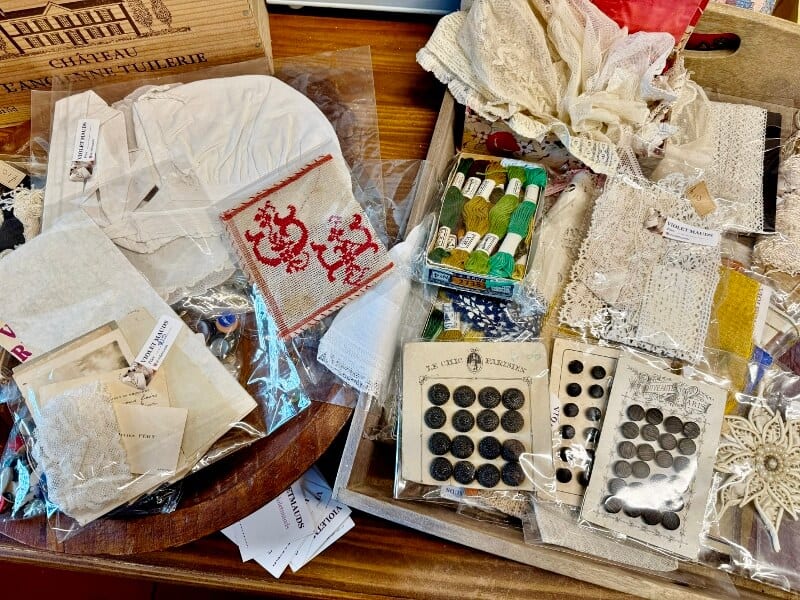
I came across this beautiful collection of sewing notions at an antique mall in England when we visited in 2025. I display similar items in a small, plaid suitcase in my antique booth with each item priced separately.
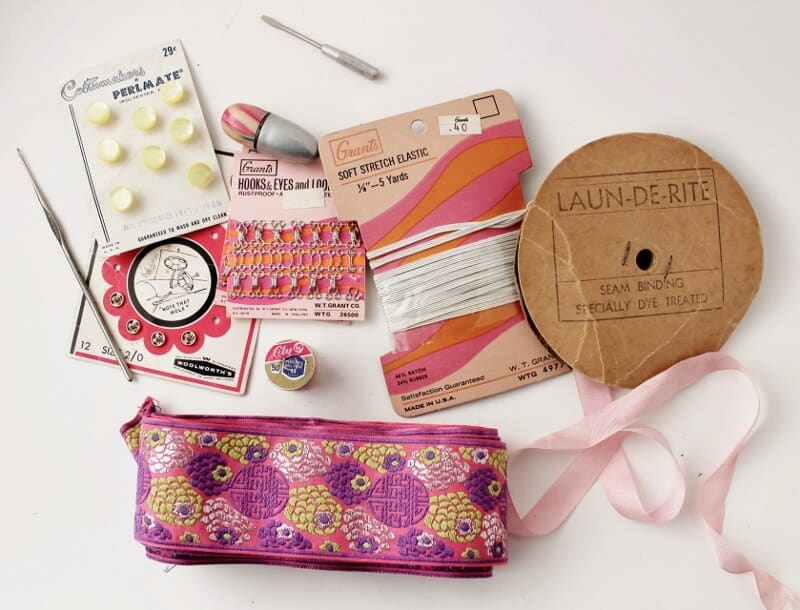
In the past I bundled several notions together and sold them on Etsy or eBay. I sold numerous collections this way in the $12-22 range. I like to color coordinated the items to make it more attractive to potential buyers.
This practice has slowed down somewhat, i.e., it takes longer for these lots to sell this way, though they do still sell. I’m hoping the market changes sometime soon!
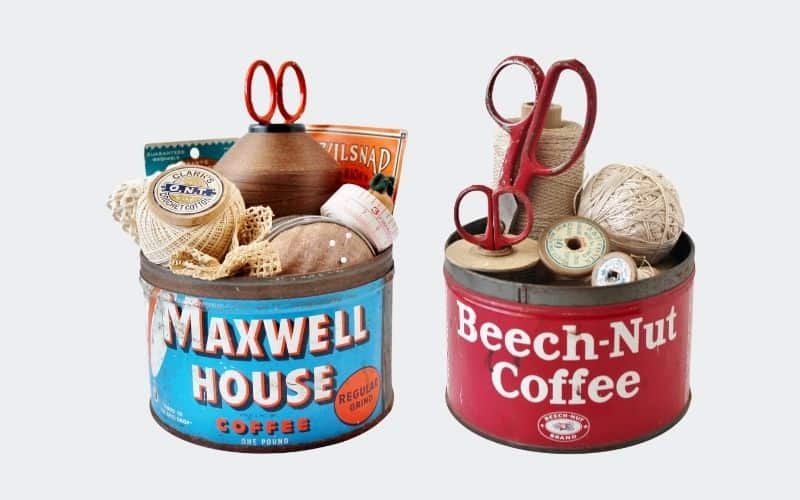
I’ve been much more successful packaging the notions in vintage containers, like these coffee tins. (Value: $30-35, sold on Etsy)
How to Sell Buttons
Selling Framed Cards of Buttons
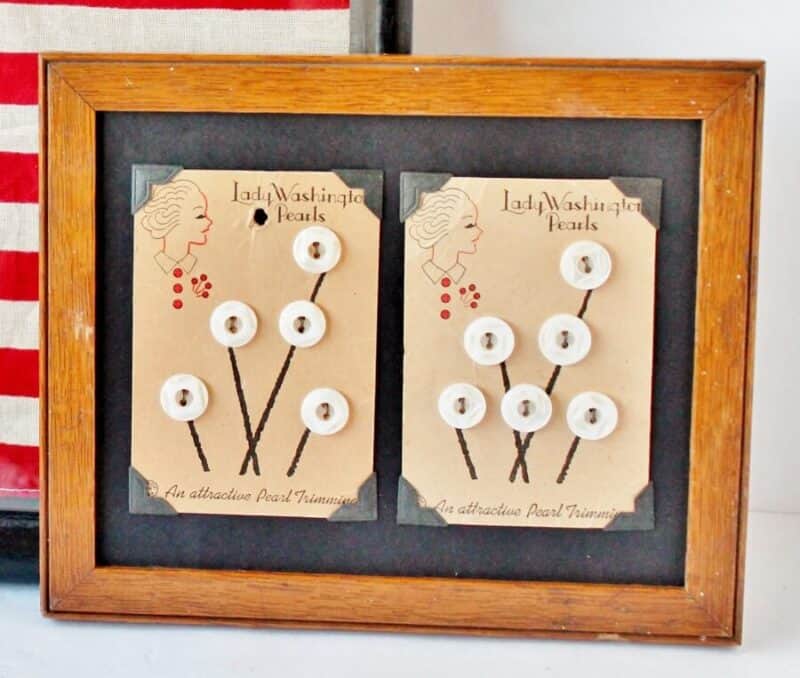
One way to sell cards of button is to frame them in vintage or antique frames. I use photo corners to hold them in place so the cards aren’t ruined. (Value: $15-25, depending on how many cards are framed, button value, and frame value)
Selling Loose Buttons On Printable Cards
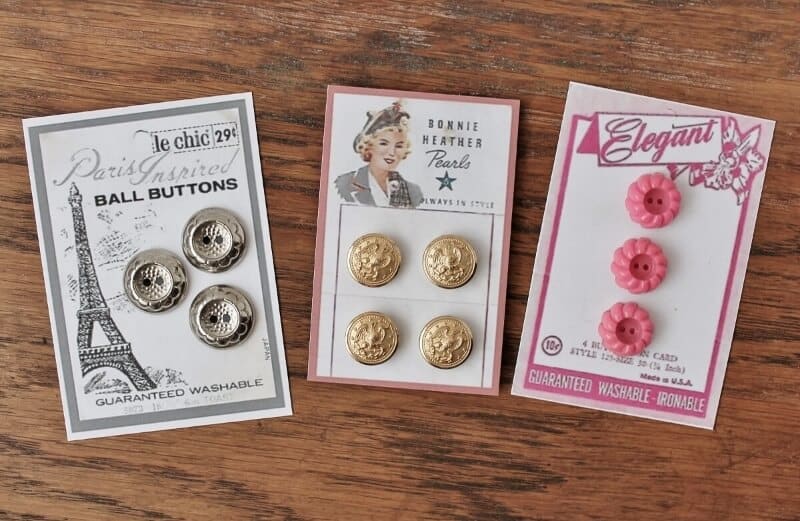
Since cards of antique and vintage buttons sell pretty well, I decided to scan some old cards (minus any buttons) that can be printed out on cardstock and used to display loose buttons. Above you see some of the cards. (Value: $2-$5, depending on value of the buttons)
You can download and print out a copy of these cards from the Member Library, which you get access when you sign up for my weekly newsletter.
Selling Quantities of Buttons in Jars
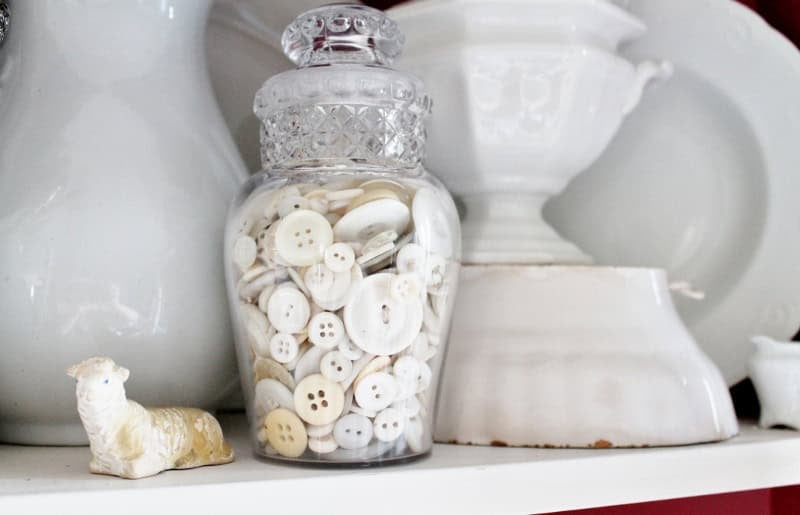
One of the easiest ways to sell buttons is to fill an antique jar with them and price accordingly. (Value: $10-$30, depending on the value of the buttons and value of the jar) The pretty antique jar of white buttons (above) sold for $18 from my antique booth.
Selling Loose Buttons in Bags
Another way to sell them is to bag small collections of like buttons, say Mother-of-pearl or military buttons, for $1-5 each and display them in a large-mouthed apothecary jar in your booth.
How to Sell Scissors
Selling From Flower Frogs
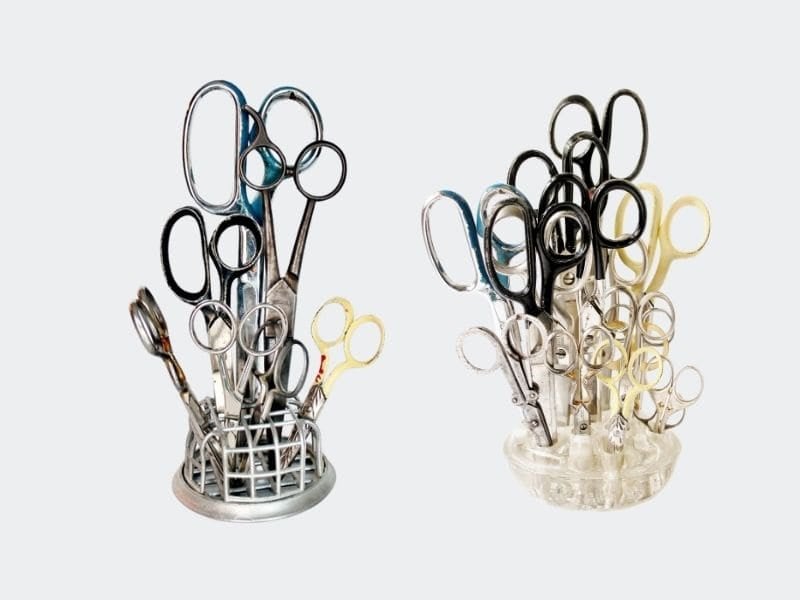
Flower frogs, whether glass or metal, serve as an interesting way to display multiple pairs of scissors for sale in a booth, as shown above.
Selling In Spools of Thread or String
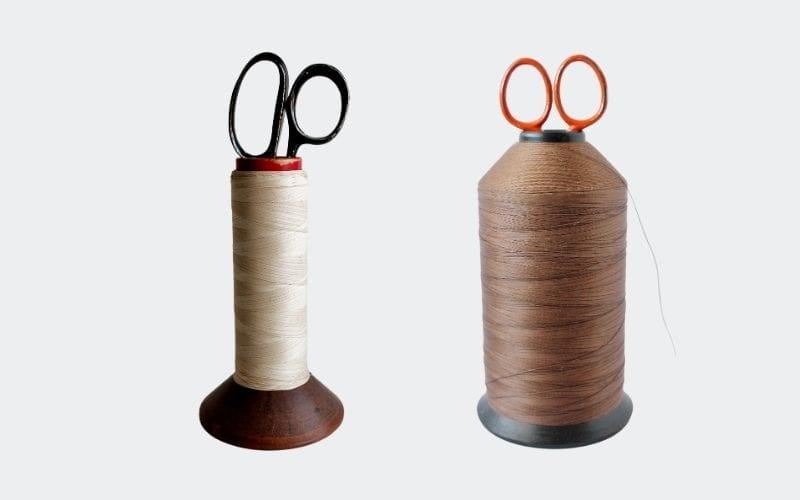
From my booth I’ve sold a number of spools of thread or string with scissors tucked inside the spool. (Value: $15-30)
Selling Scissors in Frames
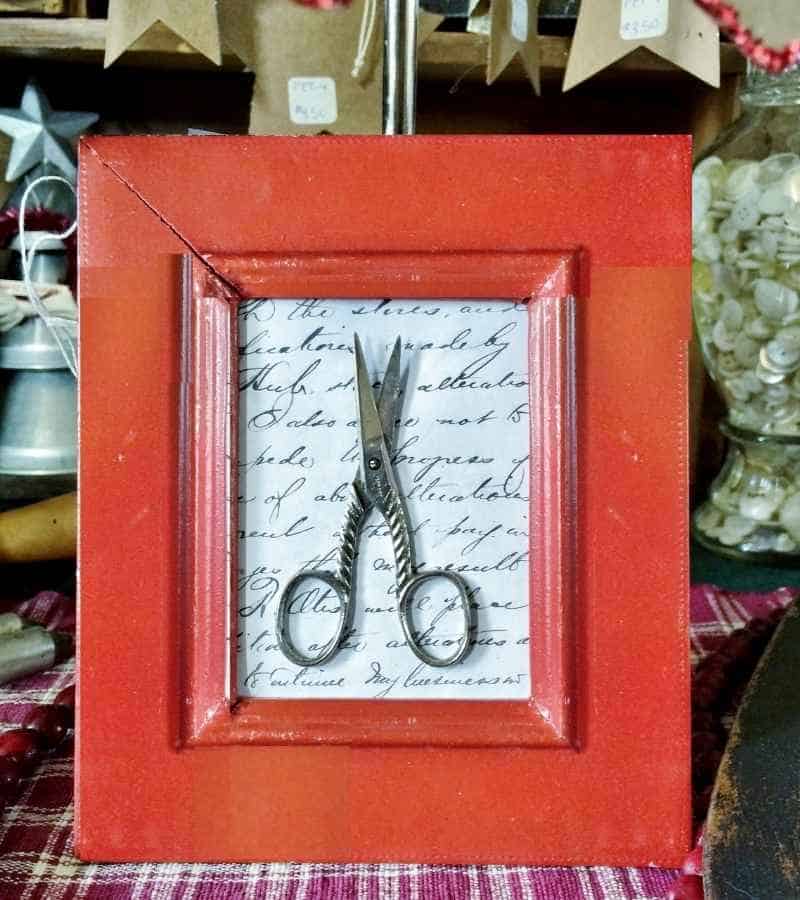
Framing pretty scissors, creates another way to [artistically] sell them. The background paper is a copy of an antique letter. (Value: $15-25)
You can download and print out a copy of the letter from the Member Library, which you get access when you sign up for my weekly newsletter.
How to Sell Thread
Selling Spools of Thread In Jars
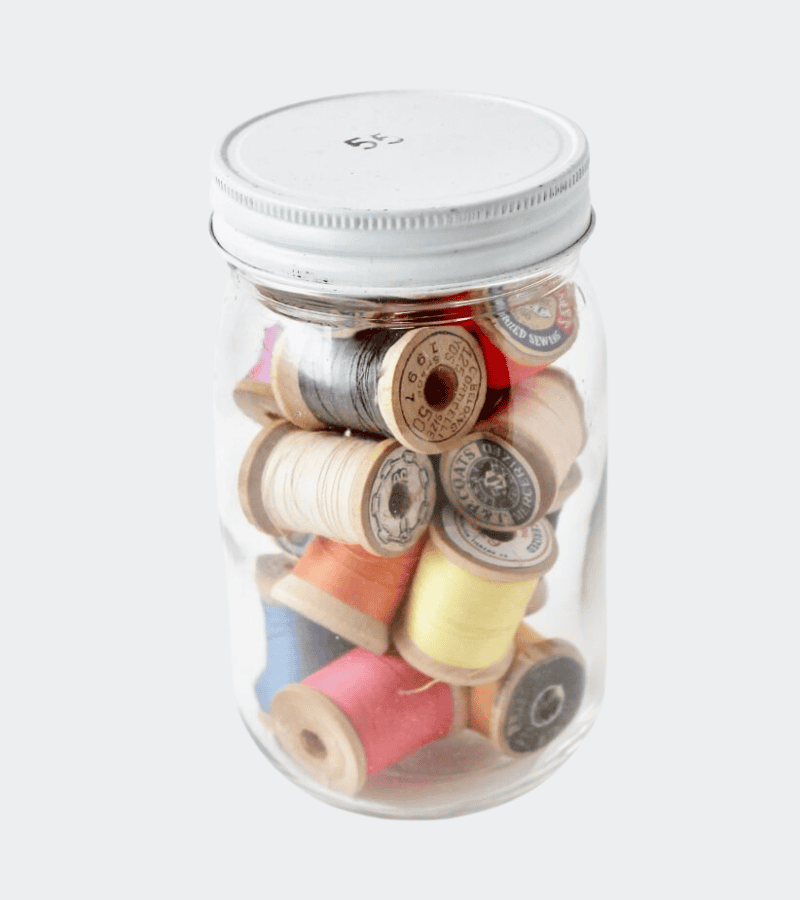
An easy way to sell spools of thread is inside a vintage jar priced at $10-20, depending on the value of the jar. The small one above sold for $10 from my antique booth.
Selling Spools of Silk Thread In Lots
Silk thread sells well on eBay, often to fly fishermen who use it when making their own “flies.” I put together 10-12 spools and sell them for $12-15 for the lot.
Using Spools in Crafts for Sale
Spools of thread serve an integral part in two projects:
Final Thoughts
For me, sewing notions are an enjoyable area of vintage selling, in part because I can typically find items at reasonable prices and then sell them at a decent markup. Let me know if you sell sewing notions and whether they are good sellers or not.
Thanks for stopping by–
If you enjoyed this post, subscribe today
and get a FREE copy of my eBook:

Bye for now,

I’d love it if you’d pin me!

I’m with you Diana. I picked up a bag of sewing notions at an estate sale for $2, & couldn’t wait to get home & take out each piece. While nothing was valuable, I made several sales from it. And then there are the times I pick up other “goodie” bags & wish I had looked at it more closely.
I’ve never heard of “toilet pins” either. Agree with your opinions on the other items. Pinned.
Gosh Diana, I remember my grandmother having the cube of pins…I don’t know what she used them for, other than she was a seamstress and sewed for people. I know real glass head pins are special, because today’s fall off so easy. Great stash—I would be tempted to display them in an old sewing basket/tin and keep the lot! lol. Sandi
I think “toilet pins” were kept on a lady’s vanity as a part of her “toiletries”, the things she needed to get ready for the day. I have also heard of perfume being called “toilet water”. None of these things have anything to do with an actual toilet as we know it today. The pins would have been used for her clothing and hats.
You’re exactly right. These would have been kept on the lady’s vanity to fasten bits of fabric, veils, collars, and such, long before buttons were so widely available. Nuns who wore black habits used them frequently even in my lifetime to fasten complicated layers of clothing “Mourning Pins” are very similar. They have black glass heads but no shine.
Still great finds! Especially if you paid $1-2 for this baggie – should be a nice profit!
I love all of your finds…and the pretty graphics…especially the pin block!
I was just thinking the other day where you could find a darner. And there you have one in a beautiful blue. I only ever remember seeing them in plain wood. I would have grabbed it in a minute!
I remember the needle threader , the exact packaging. Will have to go look thru my mothers sewing tins again and see if its there. Seems like I have even used it before. Love sewing notions and buttons, etc and I don’t even sew!
I love old sewing notions and always keep a look out for them while thrifting!
Karee
Love all your sewing notions Diana. Right now, I don’t have any little scissors I want to frame, but love the idea, and the vintage letter is a perfect background. Thanks for sharing that. I do have quite a collection of sock darners and you have given me something to consider for a way to display them. You posts are always so interesting.
Hugs,
Audrey Z.
I. LOVE. VINTAGE. SEWING. SUPPLIES. I find them frequently in my thrifting.
I know how to use the needle threader, and I hope I can explain it. The needle is placed in the tube with, I believe, the hole at the top. Then, place the middle of an 18-inch length of thread (or the length that one would use to do some hand sewing) in the groove along side the tube. Then, press the lever. It will push the thread through, and you will see a loop. (You may have to push the lever a couple of times to get this to happen.) Pull on the loop so an inch or so is visible. Then, pull one side of the loop. You may have to hold the other end of the thread so that one end will freely move and the other won’t. Pull that one side all the way through so the end comes out. I don’t remember how to remove the needle, but turning it upside-down will do the trick. There! Your needle is threaded and ready to sew. It’s no wonder you were confused. That picture certainly doesn’t help, because it doesn’t show any of the steps! It’s a good graphic, though. LOL These items are still sold to this day.
I don’t sew but am obsessed with sewing notions. Love the ones you found!
I love old sewing items, too, Diana. Probably because my grandmother taught me to sew and she sewed most of the clothing that my brother and sister and I wore when we were children. For instance, I can’t get enough of the old wooden thread spools. I haven’t figured out what exactly to do with them yet. I bought a whole shoe box full of all different sizes, all empty and of various colors. A bunch of red ones and green ones that I wanted to use for some sort of holiday decor, but just couldn’t come up with an idea. Maybe next year.
You garnered some interesting items from your bag, though. The “toilet” pins are a puzzle to me, too. Except didn’t the word “toilet” used to be used to describe a lady’s bathing and beauty routine? I wonder if the toilet pins are being used in that capacity on the item. Still not sure how the straight pins would be used with that meaning. If they were safety pins I might imagine they would help hold some undergarment together or something like that. But not with straight pins—ouch! Let us know if you do any research on “toilet pins” and discover their use!
You have some great finds there. Found this info: Traditional Toilet Pins are Spanish-made, strong and quite beautiful! Originally used before buttons were commonplace as all-purpose fastener, now these extra-long pins are wonderful for pinning together very thick fabrics, like heavy curtains.
I have bags of stuff like that I have yet to go through! I do love a good bag of treasures though. You found some interesting things. Toilet pins? No idea!
Diana, I love the color on the darner. Toilet pins – Before the button became commonplace, many clothes were pinned together and a lady would have pins on her dressing table. The toilet pins come from and era when one would need pins for hats, corsage,etc. Thanks for sharing.
OMG! I had all of those items at one time (had been my grandmothers) but a couple years ago was thinning out stuff and donated them (plus much more). Never thought of them having any value.
I am a sucker for vintage sewing notions! I have never heard of those pins either. Vintage sewing items have some of the most fun graphics! Thanks for sharing with SYC.
hugs,
Jann