
Victorian Scrap & Tinsel Ornaments: History & Values
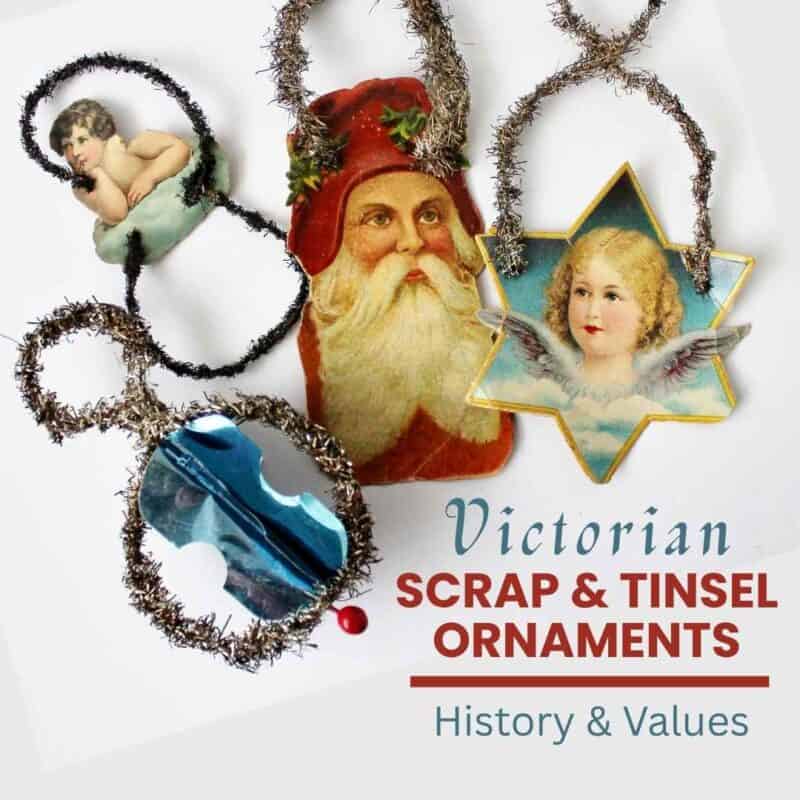
Victorian scrap and tinsel Christmas decorations once adorned parlors and Christmas trees in a time when ladies and children handmade ornaments to decorate their trees.
Today, they offer a nostalgic window into the 19th century’s festive spirit, showing us how Victorians often used creativity and craftsmanship to turn their homes into glittering holiday showcases.
What Are Scraps?
Scraps refer to chromolithographed paper decorations (often embossed as well) that were popular in the late 1800’s. Used primarily in the scrapbook hobby, “scraps” became the name they were known by. England and Germany produced large quantities of scraps during this era.
The Chromolithographic printing process involves the use of up to 19 or 20 different colors and results in beautifully rich and detailed images. After printing, the scraps would go through the final steps of embossing and diecutting to produce scraps ready for market.
According to Phillip V. Snyder, author of The Christmas Tree Book (1976), “Each Christmas brought a new set of holiday scraps to stationery, variety, and general stores.” Can you imagine the excitement of crafters and scrapbookers back in the day when the new scraps hit the shelves of their local shops?
Buyers could select from all sorts of themes, including farm animals, flowers, butterflies, and of course Christmas. Among the Christmas options, buyers could select from both secular examples, like Santa Claus or religious ones, like angels.

This Father Christmas scrap likely originated in Germany where Santa looked like a skinny old man, rather than a fat one.
The round-bellied character was a product of the US. Thomas Nast (from nearby Troy, NY) designed him as a chubby, pipe-smoker for Clement Clark Moore’s, A Visit From St. Nicholas (1822).

You may be familiar with scraps if you’re a fan of Victorian calling cards since many were decorated with darling floral scraps, sometimes with pithy sayings.
NOTE: When you subscribe to my weekly newsletter (filled with essential antique info) you get access to my Member Library where you’ll find printable Victorian calling cards (under Vintage Printables).

This images gives you an idea of how scraps were sold: in paper sheets with small tabs connecting the images.
Scraps are widely reproduced and available on Etsy and at companies specializing in paper crafts. I picked up the three repro pages you see above at a garage sale many years ago.
History of Victorian Scrap Ornaments

It shouldn’t be surprising that with the proliferation of these charming scraps that someone, somewhere would take the initiative and use them to decorate their Christmas tree.
In fact, magazines at the time provided simple instructions for turning them into ornaments. It merely involved poking holes at the top and threading wired tinsel through. Bending the tinsel and giving it a twist around the opposing piece finished things up nicely.
Tinsel attached to the top allowed it to be hung, and a piece at the bottom added an extra embellishment.
Scrap Examples

This scrap, featuring an angel in a star of David shape has some minor condition issues: fold lines and some cipped tips. Isn’t she adoable? Value: $10-15 ($15-18 if perfect)
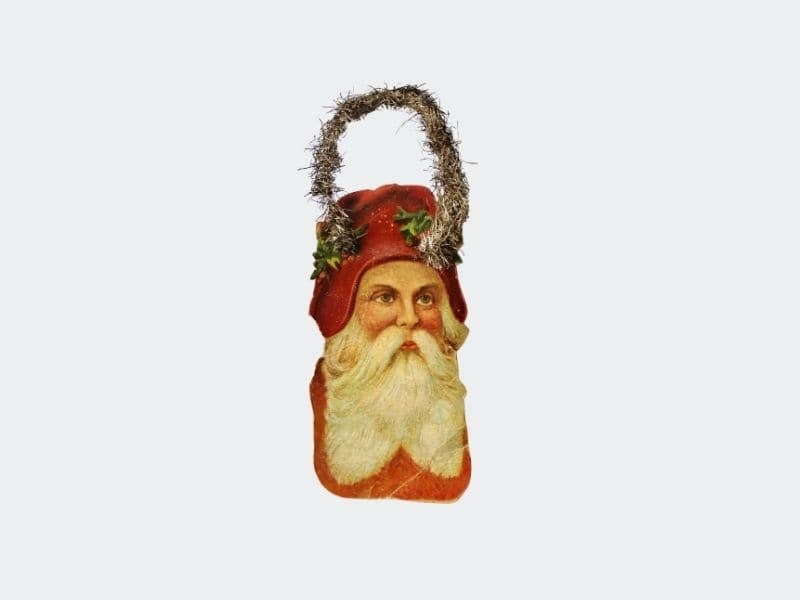
Collectors and decorators love Father Christmas scraps like this one. He also has some condition issues: Fold line on bottom right. Value: $12-15 ($18-25 if perfect)
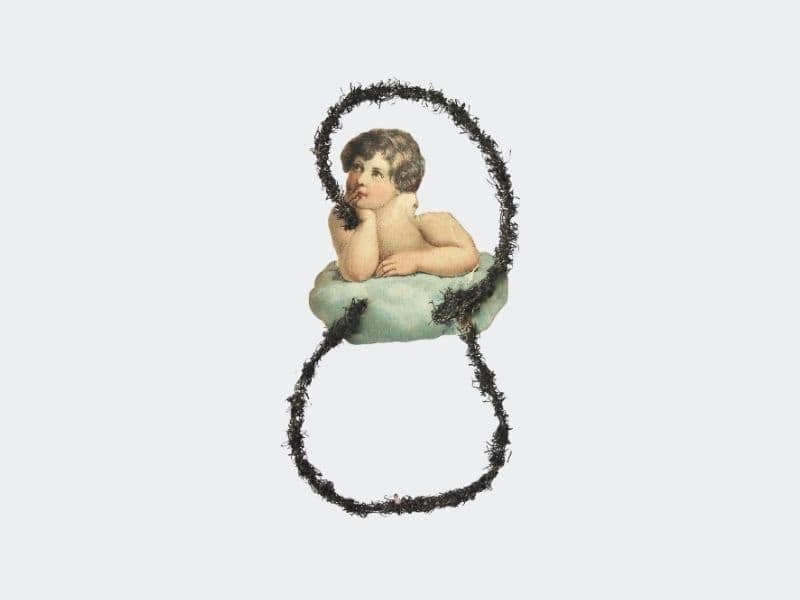
This classic cherub has tinsel on both the top and bottom. Similar to the other two, he has some condition issues: some crease lines. Value: $10-15 ($15-18 if perfect)
Other Paper-Related Articles You’ll Enjoy


Final Thoughts
Not many Victorian scrap and tinsel ornaments have made it through the decades to the 21st century. Many years of use sometimes leaves the paper in delicate, imperfect condition and the tinsel sometimes turns a bit dark (rather than remaining sparkly).
That means that collectors will often put up with some condition issues. So go ahead and pick up any examples, so long as the price is right. You’ll be able to turn them around and make a profit without any trouble.
Thanks for stopping by–
If you enjoyed this post, subscribe today
and get a FREE copy of my eBook:

Bye for now,

Would you pin this to your favorite Pinterest board?? Thanks!


I LOVE this article and the research on these beautiful pieces of history. I’m excited to hunt for these when I am out and about!
Thanks so much for lettng me know you enjoyed the article, Kari! Here’s hoping you find some scraps soon 🙂
Thanks for sharing. This is something I hadn’t seen before. Inspires ideas of how to use vintage Christmas cards in the same manner. Just wondering what the back of these vintage scrap ornaments look like?
You’re welcome Marie! Great idea to use vintage Christmas cards in the same way. The backs are off-white and these examples have the name “Ruth” written in pencil.
Thank you for the VERY informative article!
I had NO idea that they were doing scrapbooking in the 1800’s!!??
I just adore your articles. I’m off to search your site for late 70’s “vintage” jewelry 🙂
Thanks again,
Mary