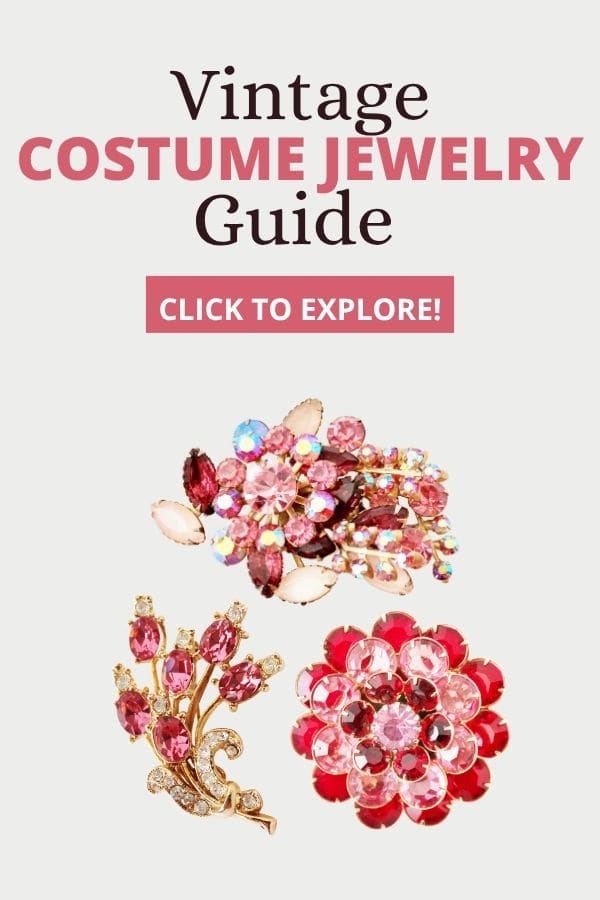
A Vintage Costume Jewelry Guide [Types to Sell & Values]
If you’ve ever wondered, “Does vintage costume jewelry from the 20th century sell?” I’m here to tell you yes! Pieces sell anywhere from $5-$100 or more, but you have to know what to look for.
In this article, you’ll see examples from over 25 categories of costume jewelry, along their values. This will give you an idea of what to look for and what price point to focus on when you’re out vintage shopping.
NOTE: Most pieces below sold previously, several belong to my personal collection.
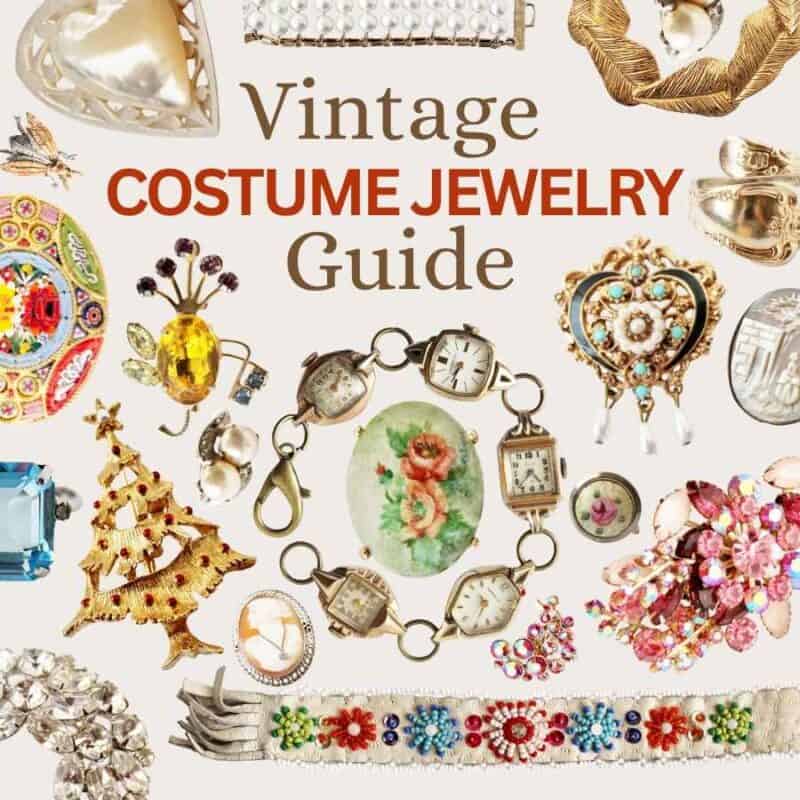
Vintage Costume Jewelry Background
Costume jewelry has been adding a special sparkle to wardrobes for more than a century, making it one of the most popular and collectible categories of vintage and antiques. Meant as an alternative to expensive fine jewelry, costume pieces were modelled after the pricier ones, using base metals, rhinestones, faux pearls, plastic, enamel, and other resources to create “dupes”.
The rise of Hollywood and fashion magazines contributed to the increased demand as women (and men!) began to see stars and models over and over again wearing beautiful jewelry. Costume jewelry met the growing “need”.
Flash forward to today: the intrinsic beauty and quality of a lot of costume jewelry has created a huge market for these vintage pieces. Understanding the craftmanship that went into creating this lovely jewelry will help inform your purchases, whether you’re buying to keep or sell.
From rhinestone brooches to Bakelite bangles and elegant faux pearl necklaces, vintage costume jewelry from the 1930’s through the 1990’s remains one of the most enjoyable and accessible collectibles to hunt for today.
Table of Contents
Austrian Crystal
Charm Bracelets
Christmas Tree Pins
Cocktail Rings
Enamel Flower Power Jewelry
Guilloche
Handmade
Hand Painted
Micro Mosaic
Mid-Century Modern
Mother-of-Pearl
Plastic
– Bakelite
– Celluloid
– Lucite
Native American
Rhinestone
SIGNED JEWELRY
– BSK
– Coro
– Florenza
– Givenchy
– KJL
– Kramer
– Sarah Coventry
– Trifari
– Van Dell
– Weiss
Silver Plated
Wedding Jewelry
What to Look for In Costume Jewelry
Where to Find Vintage Costume Jewelry
Austrian Crystal
Some Austrian crystals from the 1950’s and 60’s have a unique irridescent sheen (sometimes called aurora borealis) that makes them easily stand out amongst other, less radiant jewewlry. Clear is the most common color but you can find them in many others, including black, pink, blue, for example.
You’ve likely heard of Swarovski crystals. The founder, Daniel Swarovski, is credited with having invented rhinestones early in the 20th century and then later in the 1950’s, with introducing the world to aurora borealis rhinestones, now referred “Austrian” crystals.
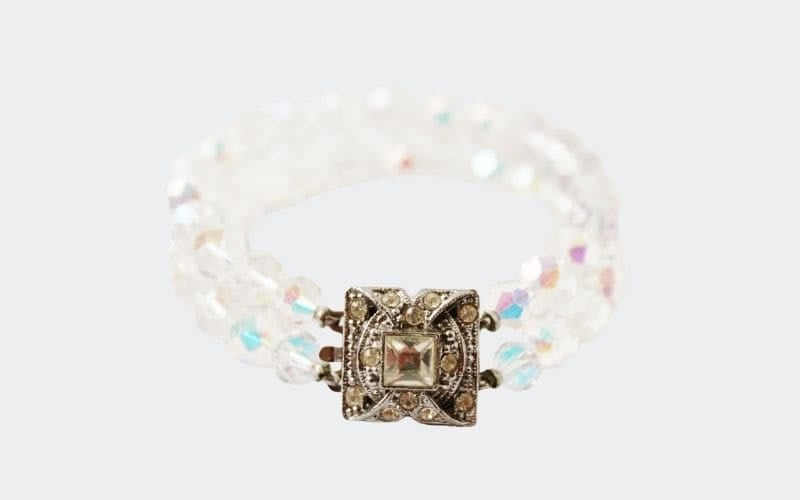
Clear Iridescent Austrian Crystal Bracelet
c. 1950’s-60’s
Value: $18-$22
Charm Bracelets
Back in the 50’s and 60’s, almost every young lady owned a charm bracelet of some kind. Sterling silver would be one’s first choice, but if not affordable, then gold or silver-tone examples, usually with themed charms, like animals with rhinestone eyes, Washington, DC sites, or tumbled stones would have to do.
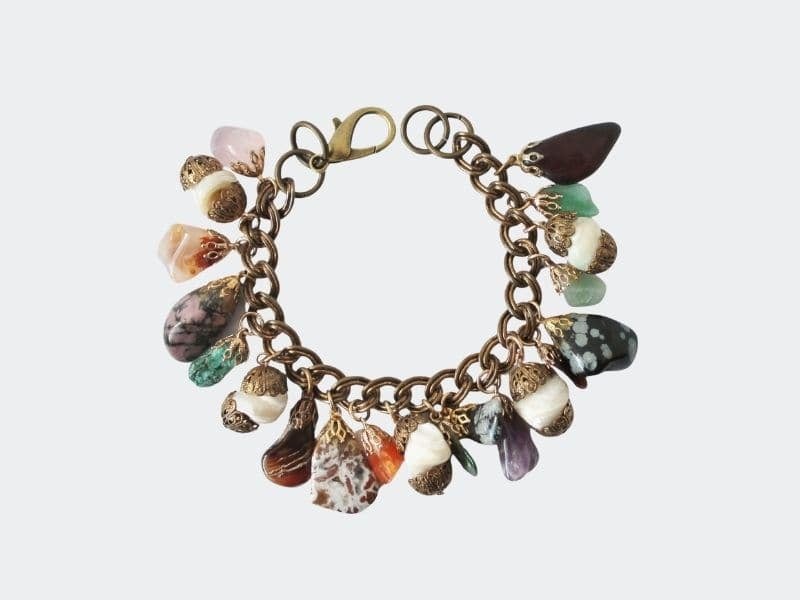
Tumbled Stone Charm Bracelet
c. 1950’s-60’s
Value: $25-$35
Christmas Tree Pins
Of all the vintage holiday pins one can find out in the wild, Christmas trees are the most collectible, and they have a large following. Look for names like MYLU, Gerrys, and Monet
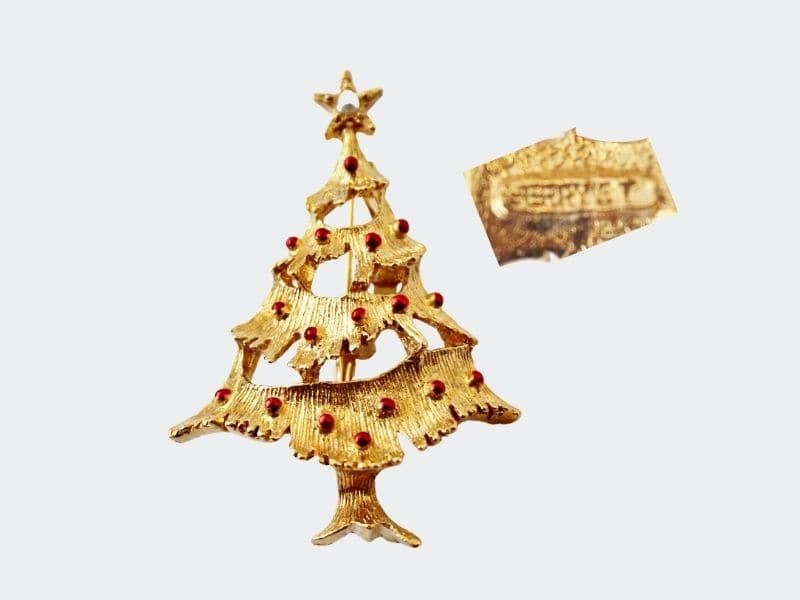
Gerrys Christmas Tree Pin
c. 1950-60’s
Value: $25-$30
Related Article:
Cocktail Rings
Back in the 1960’s and 70’s cocktail rings became hugely popular. It was the era of cocktails and fancy dress–fancy jewelry went right along with the look and the atmosphere.
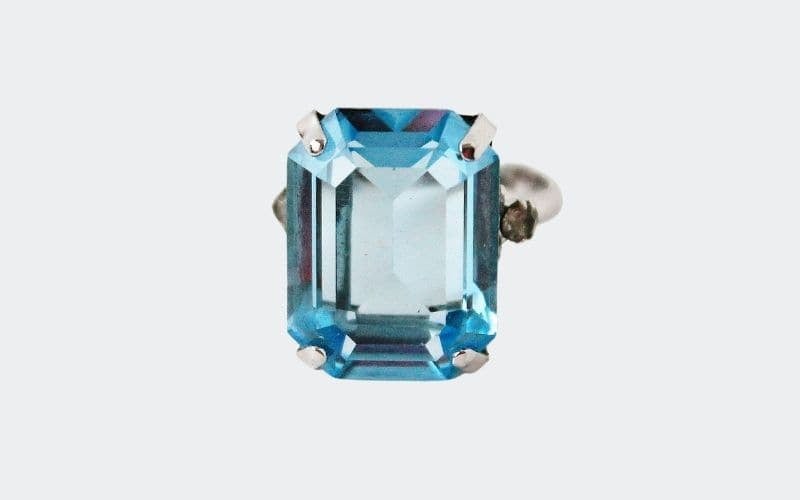
Aqua Glass Stone Cocktail Ring
c. 1960-70’s
Value: $20-$30
Related Article:
Enamel Flower Power Jewelry
“Flower Power” jewelry gets its name from Beatnik, Allen Ginsburg, and reflects the 1960’s embrace of anti-war passivism. Bright, colorful flowers became an emblem of the era. The pretty, enamel-painted jewelry that flowed from this movement became known as “flower power” jewelry.
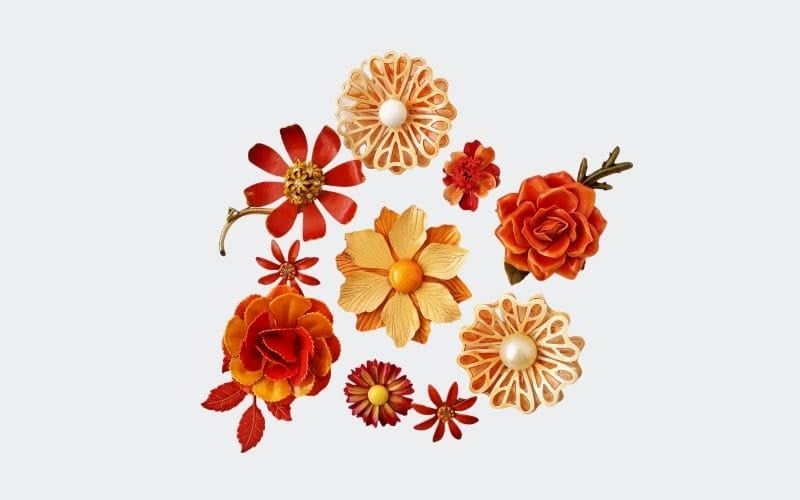
Variety of Enamel Flower Power Pins
c. 1960-70’s
Value: $10-$30 each
Related Article:
Guilloché
Guilloché is a French form of enamel work that involves creating a uniform pattern in the enamel. Quite beautiful, it sells well on Etsy where I’ve sold several beautiful pendants. I’m hoping that clip on/screw-back earrings (like those below) also sell well.
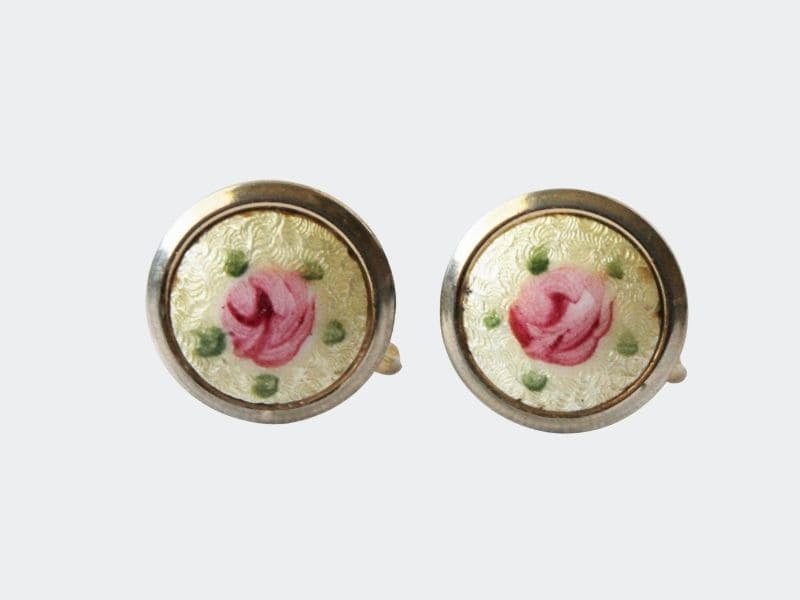
Guilloché Screw-Back Earrings
c. 1960-70’s
Value: $25-$20
Related Article:
Handmade
Etsy is proof that there’s a high demand for quality, hand-crafted jewelry. When I come across pieces out in the wild that have been clearly handmade, I describe them as “artisan” or “artisan-style” in my descriptions.
I don’t consider myself a jewelry-maker but I do compile some pieces, that is, I take various vintage parts and put them together to create something beautiful.
I acquired a large stock of religious medals a while back and began making charm bracelets with them. I place “like” charms together to create a theme. In the photo below you see one focused on Mother Mary. I’ve also made some in gold with Jesus as the theme using a combo of crosses and Jesus medallions.
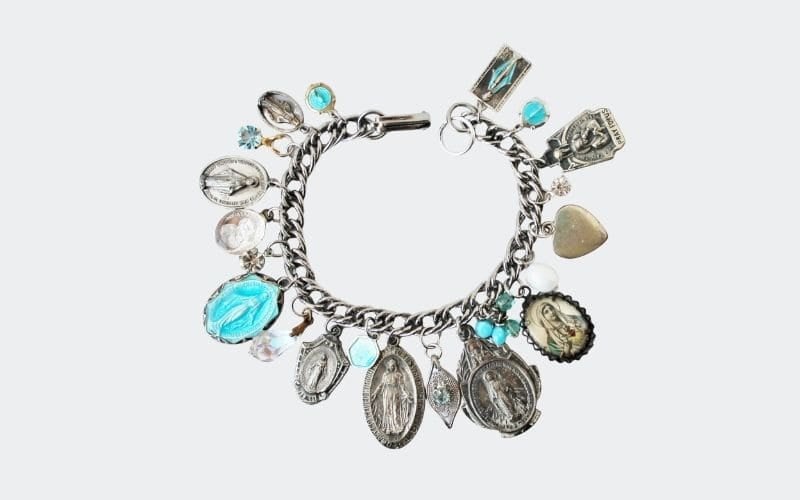
Silver Tone Mother Mary Charm Bracelet
Value: $60-$70
In addition, I make pierced earrings out of old, dangley clip on earrings, along with other found objects.
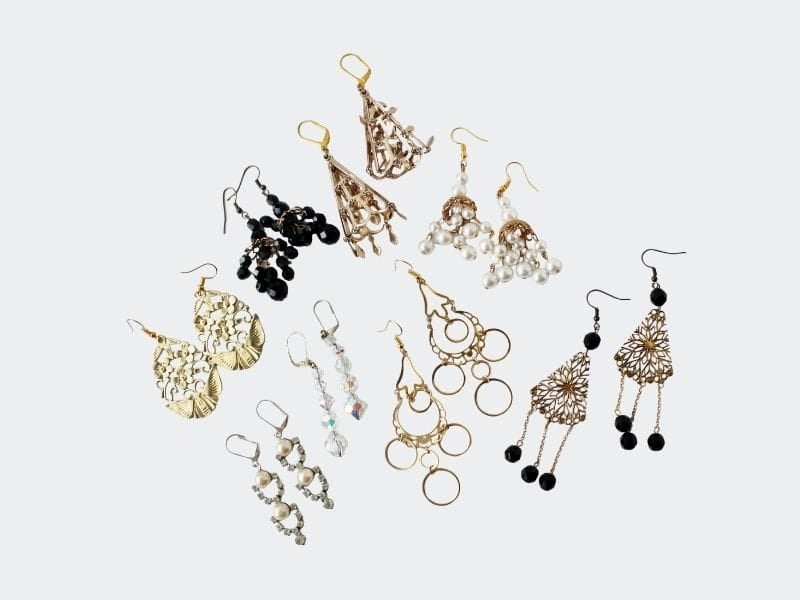
Selection of Dangle Earrings Made from Clip Ons
Value: $12-15 each
Related Article:
Hand Painted
During the Victorian era into the early 1900’s, hobbyist painters created quaint artwork on pieces of porcelain: plates, placques, and jewelry, for example.
The Limoges potteries in France produced blanks that they shipped around the world. Home artists filled them with flowers, ladies portraits, and romantic scenes. Pieces decorated for jewelry would then be set in brass or gold-filled metal.
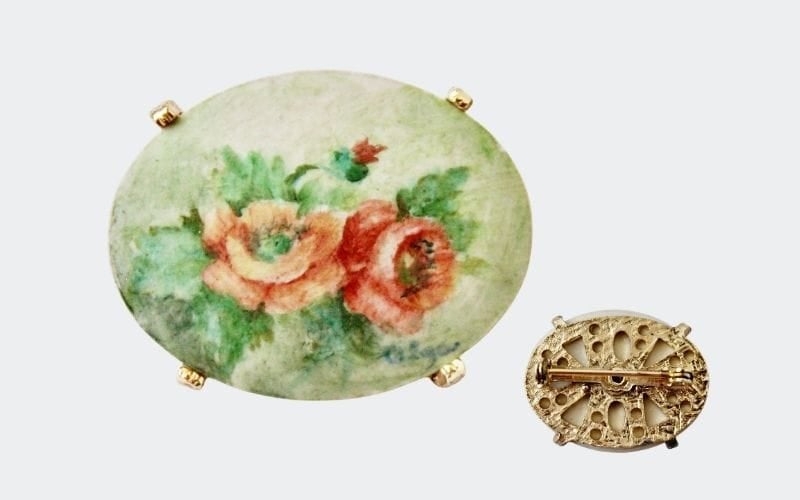
Handpainted Porcelain Brooch
c. 1920’s-30’s
Value: $20-$30
Micro Mosaic
Italian craftsman created micro mosaic jewelry using tiny pieces of glass to form exquisitely detailed designs, usually floral. Antique pieces would be set in silver or gold while newer ones are set in brass or base metal.
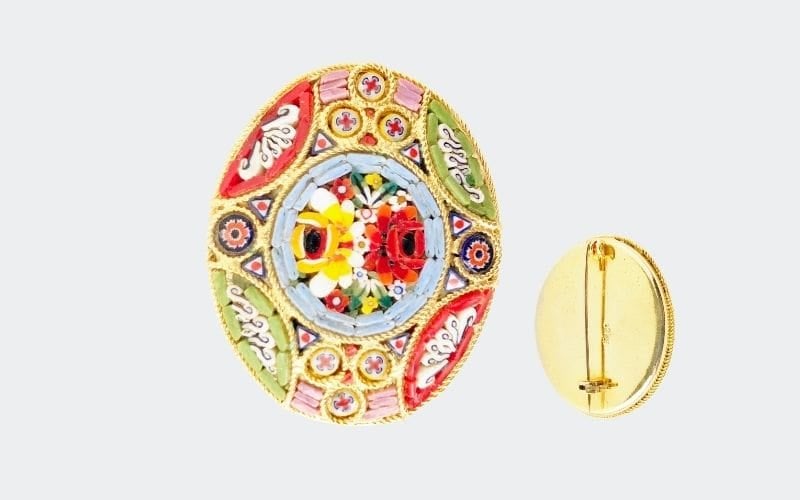
Micro Mosaic Brooch
Marked “Italy”
c. 1930’s-50’s
Value: $25-$35
Mid-Century Modern
Almost anything Mid-century modern falls into the “highly collectible” category, including jewelry. Look for mod designs, like mobiles (think Alexander Calder) and pieces by Danish jewelers like Georg Jensen.
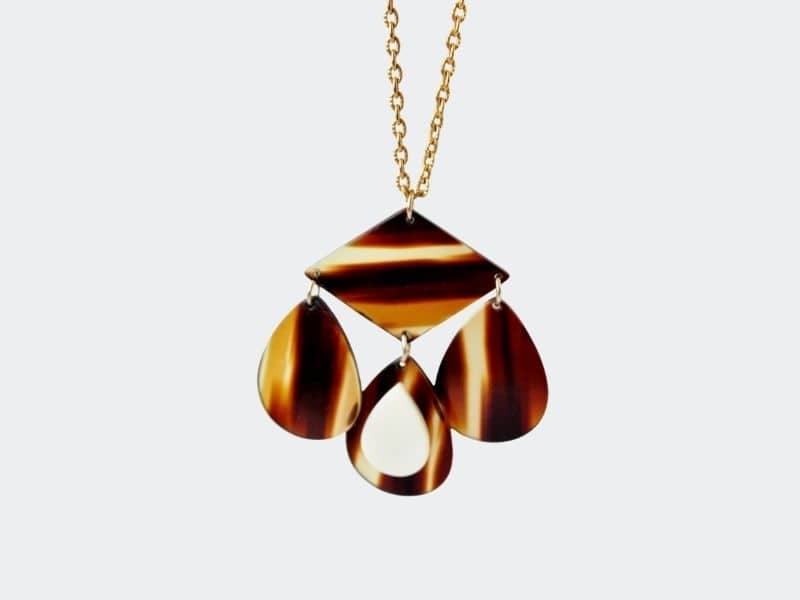
Faux Tortoise Shell Mobile Pendant
c. 1950’s-60’s
Value: $30-$40
Mother-of-Pearl
Mother-of-Pearl has been used to create beautiful jewelry for centuries, particularly during the Victorian era. Its abundance in nature means collectors can easily find examples of this beautiful, shimmery jewelry out in the wild.
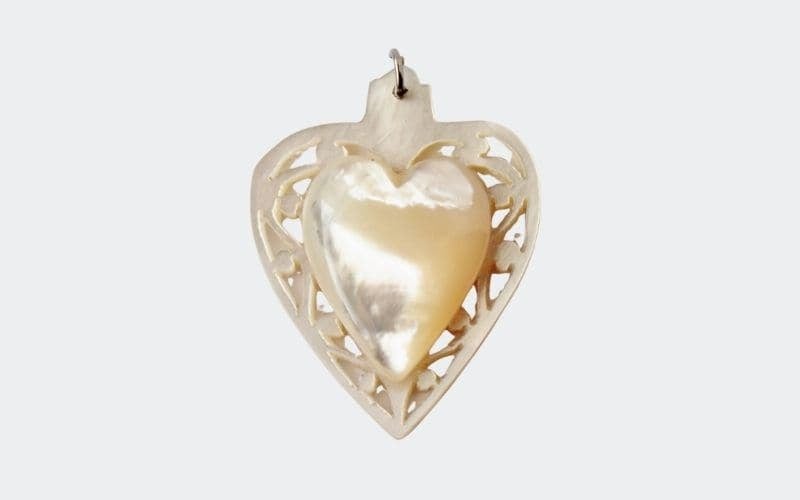
Carved Mother-of-Pearl Heart Pendant
c. 1910’s-20’s
Value: $20-$25
Native American
Beadwork produced by Native Americans dates to the post-Colonial period when Europeans introduced native peoples to glass beads after first contact.
The jewelry produced reflected designs popular with indigenous people: flowers, geometric shapes, and animals. Most Native American jewelry found out in the wild was made for the souvenir market.
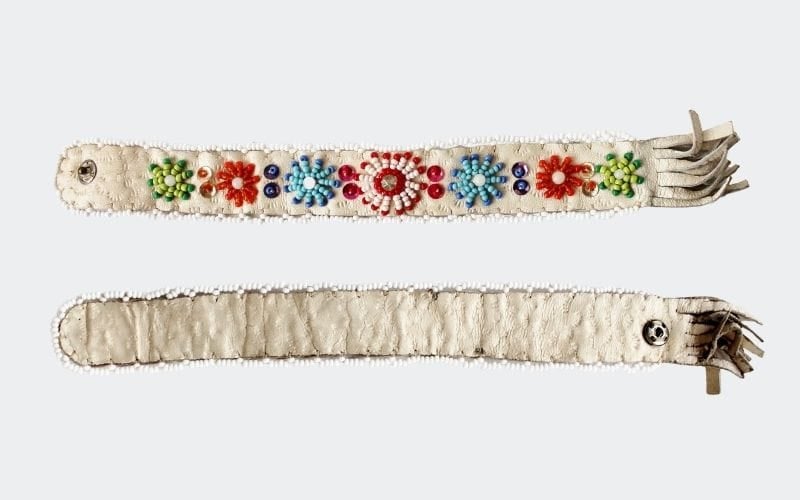
Vintage
c. 1960-70’s
Value: $20-$30
Related Article:
Plastic
Celluloid
Celluloid is an early form of plastic designed to mimic ivory, hence one of its nicknames: French Ivory. Its inventor compressed paper pulp and adhesive gum in 1870 to create a product used, for example, to make movie and x-ray film. Collectors, however, look for celluloid clocks, vanity jars, jewelry, and more.
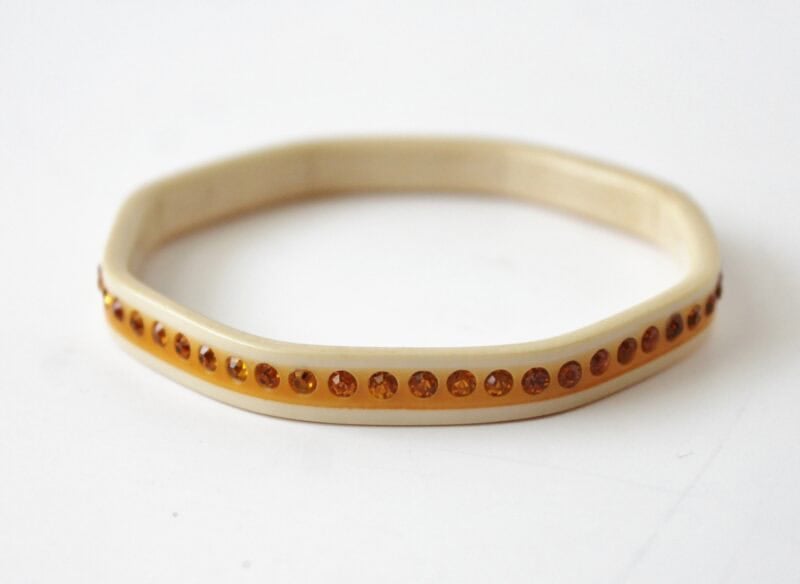
Celluloid & Rhinestone Bangle Bracelet
c. 1910’s-20’s
Value: $15-$20
Related Article:
Bakelite
Time Magazine featured the inventor of Bakelite, Leo Baeklite, on its cover in 1924. Another early form of plastic, Bakelite was used in the manufacture of insulation, billiard balls, and jewelry. It could be produced in a large range of colors with delightful names like butterscotch, apple juice, and cornflower.
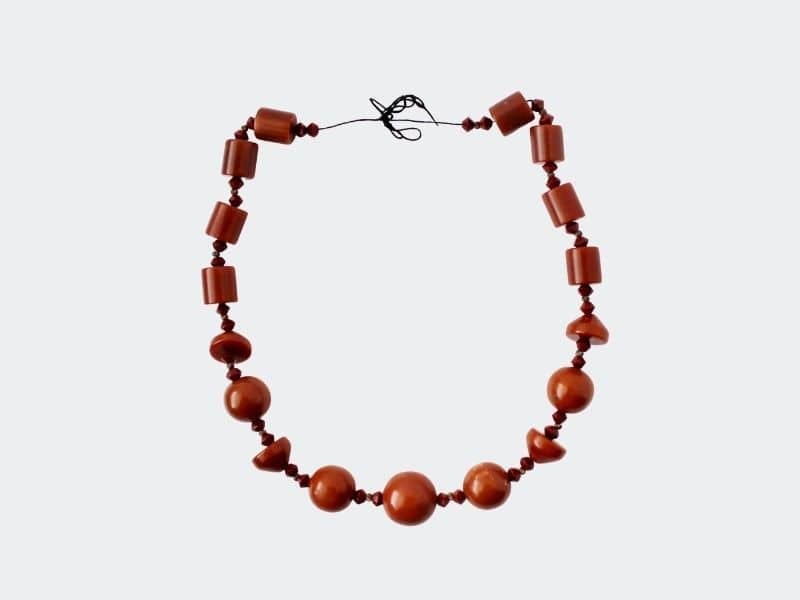
Brown Bakelite Beads
In need of some repair
c. 1930’s-40’s
Value: $20-$30
Related Article:
Lucite
Dupont developed Lucite, also known as acrylic or plexi-glass, in the 1930’s as a shatterproof alternative to glass. It has had many industrial and military uses over the years, but in jewelry making as well. An added bonus: Unlike celluloid and Bakelite, it is not easily flammable.
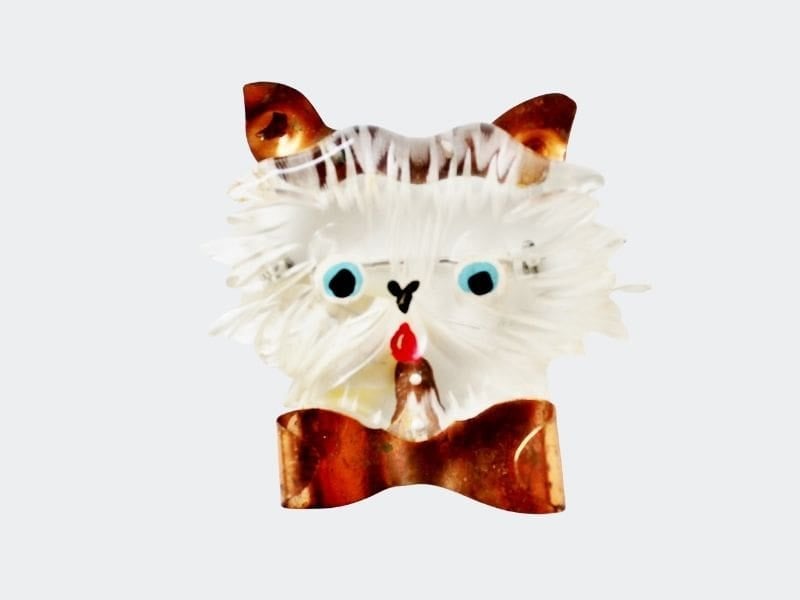
Clear Lucite Cat Brooch
c. 1940’s-50’s
Value: $130-160
Rhinestone
Rhinestones are a huge, but important category! Beautiful pieces made with colorful, prong set stones are highly sought after, especially those with maker’s marks like Weiss or Eisenburg. Look for pieces made with Swarovski crystals or cubic zirconia.
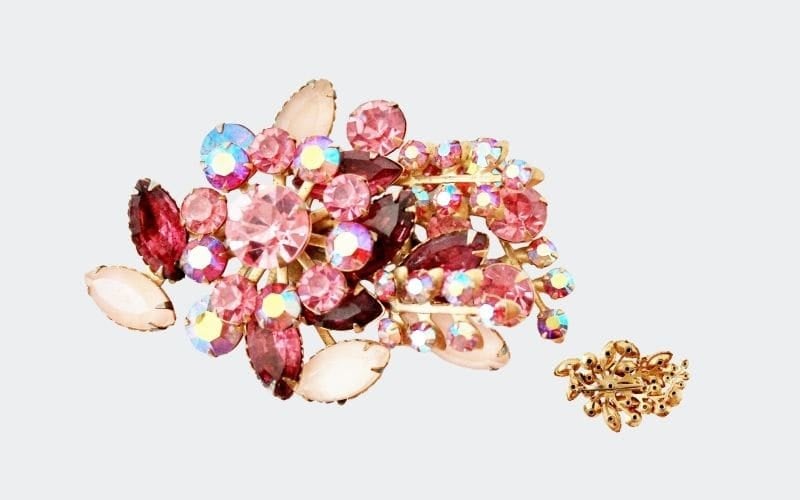
Prong Set Pink Rhinestone Brooch
c. 1950’s-60’s
Value: $40-50
Signed Costume Jewelry
BSK
Not a lot is known about jewelry maker, BSK, except three gentlemen opened the buiness in 1947 in NYC and they derived the name from some of their initials: Benny (Steinberg), (Hyman) Slovitt and (Unknown) Kaslo. They produced attractive but inexpensive jewelry up until the mid-1980’s.
The BSK mark is always on a rectangular cartouch and is accompanied by a copyright symbol, before or after.
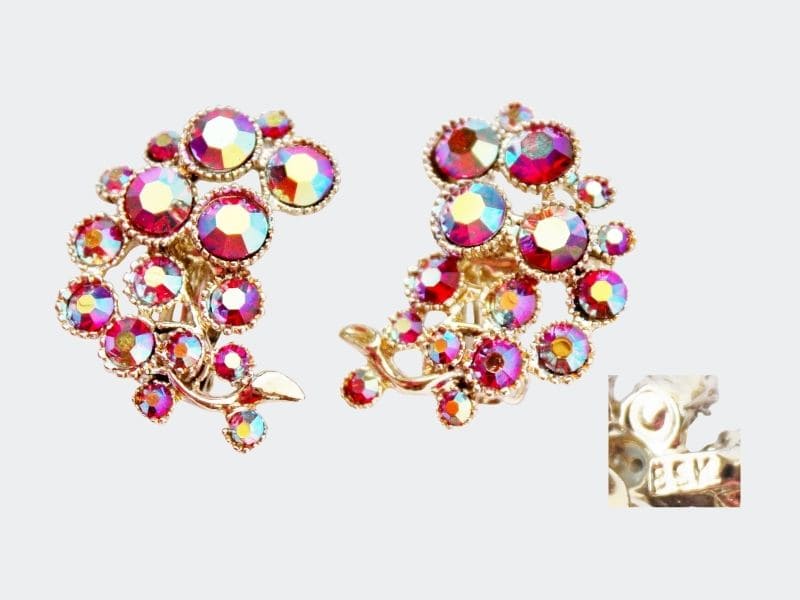
Pink Iridescent Crystal Clip On Earrings
c. 1950’s-1960’s
Value: $10-15
Coro
Cohn & Rosenberger, NYC jewelers, incorporated in 1913, but began marking jewelry Coro (after the first two letters of each surname) as early as 1911.
Over the years they have used dozens of different marks. Corocraft and Vendome, reserved for higher end pieces, are two names you might come across. In its 1950’s heyday, Coro was the largest producer of jewelry in the world! They went out of business in 1979.
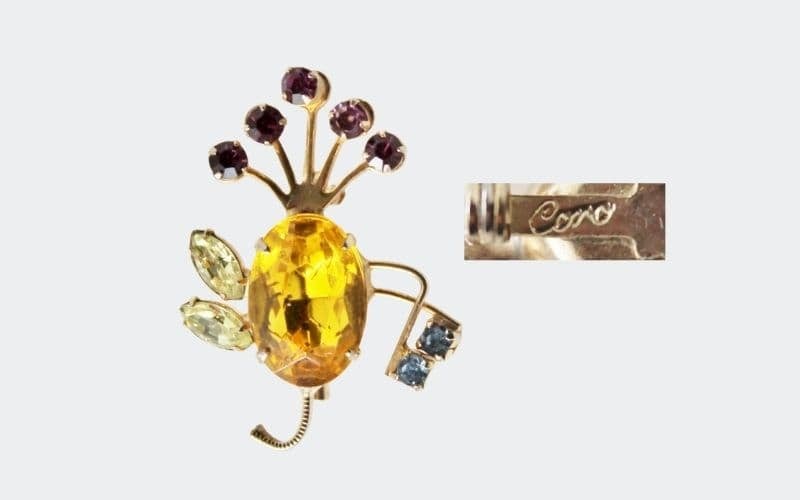
Prong Set Rhinestone “Bug” Brooch
c. 1930’s-40’s
Value: $25-35
Florenza
Daniel Kassoff, the founder of Florenza jewelry, began marking his Victorian style jewelry with this mark in about 1949. He and his son Larry stayed in business until 1981. Their jewelry is known for both its beauty and high quality.
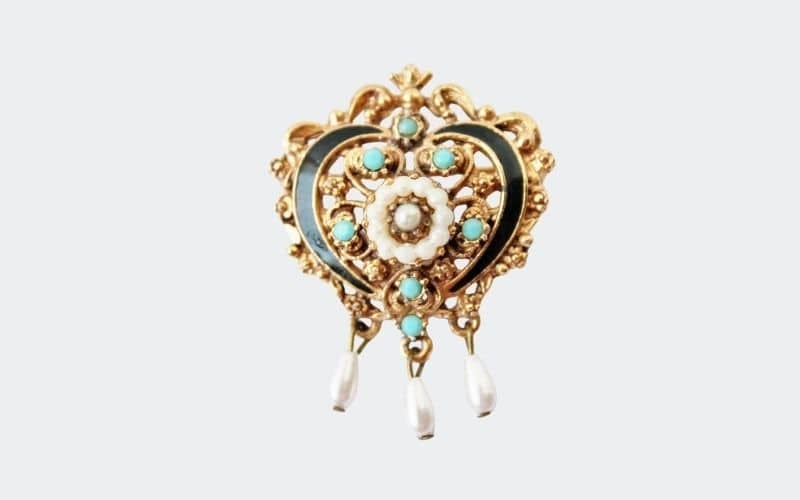
Ornate Heart-Shaped Brooch
c. 1960-70’s
Value: $25-$35
Givenchy
Hubert de Givenchy entered the French fashion world in 1952 with the House of Givenchy. In the mid-1970’s they began offering designer jewelry. Look for cartouche logos, snake chains, swarovski crystals, and G clasps.
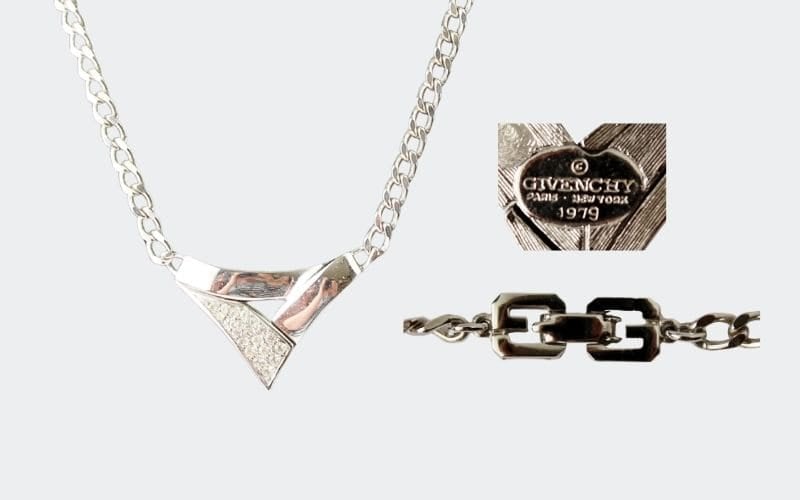
Swarovski Crystal & Silver Tone Necklace
With G clasp
c. 1979
Value: $40-$50
KJL
KJL stands for Kenneth J. Lane, a designer whose jewelry initially sold in department stores like Saks Fifth Avenue and Bonwit Teller. Founded in 1963, the jewelry is known for its high qulaity and ability to make a statement. The company remains in business today.
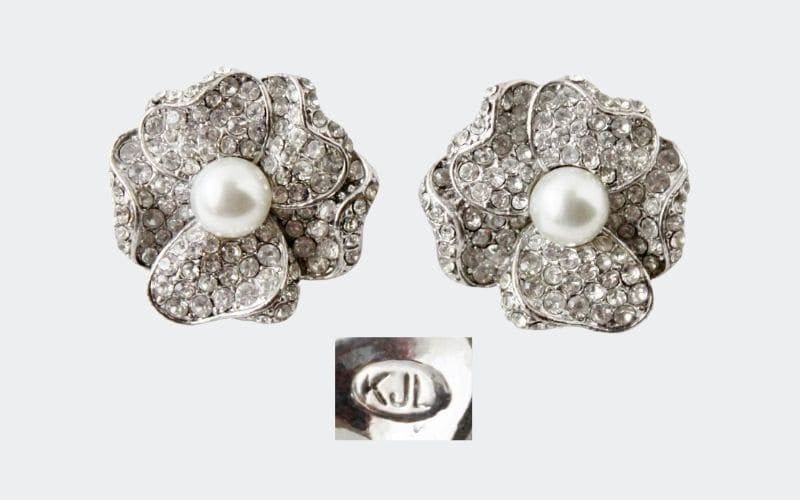
Rhinestone & Fauz Pearl Dogwood Earrings
c. 1970’s-80’s
Value: $55-75
Kramer
The high end Kramer Jewelry Company entered the jewelry world in 1940’s NYC. Founder Louis Kramer and his jewelry-experienced family immigrated from Poland in 1935. The company produced beautiful pieces, often with Austrian crystals, into the 1980’s.
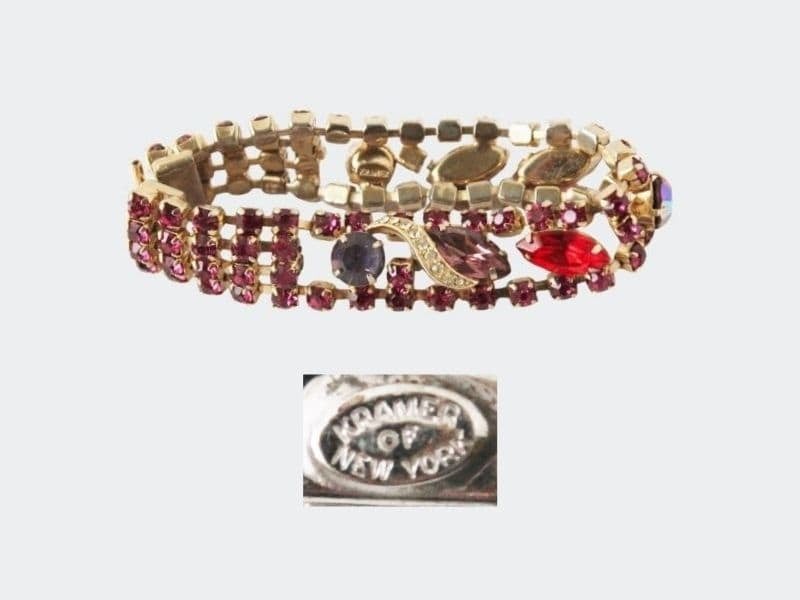
Ornate Prong Set Austrian Crystal Bracelet
c. 1950-60’s
Value: $80-$100
Monet
The Monet brand and the variation “Monet Jewelers” date to 1937. It was among the first jewelry companies to consistently brand their high quality products.
Because they lack a designer name and currently have a rather small following, now is the time to collect Monet because their value is likely to increase over time.
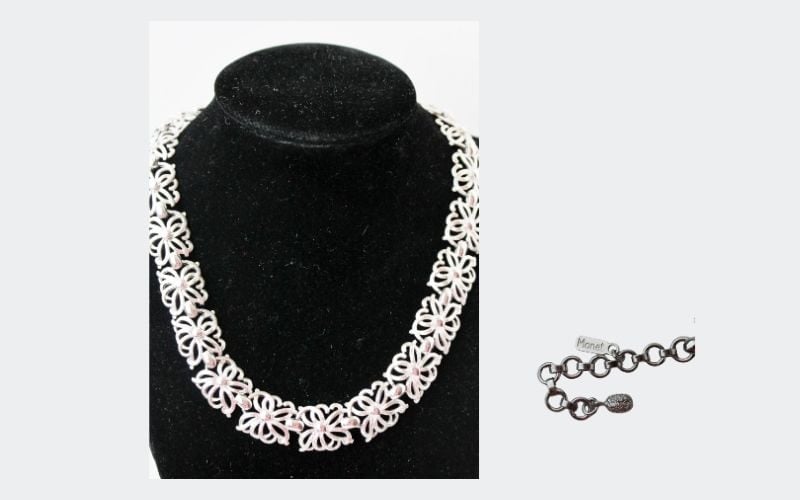
White Enamel Filigree Necklace
c. 1960-70’s
Value: $20-$30
Sarah Coventry
The name Sarah Coventry is familiar to many because of the popular in-home parties they held across the country for many years. Think Tupperware and you get the idea. Founder Harry Stuart in fact started two jewelry companies: Sarah Coventry and Emmons.
The Sarah Coventry line went bankrupt in 1984, however, several companies kept the name alive through 2021. Pieces between those dates are [unhelpfully] marked “Sarah Coventry”.
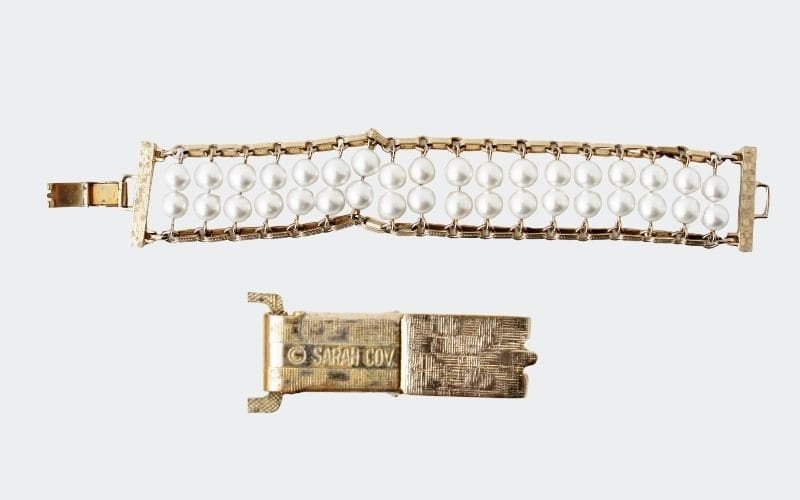
Faux Pearl Bracelet
c. 1960-70’s
Value: $15-$25
Related Article:
Trifari
Trifari founder, Giovanni Trifari, designed and sold products from 1925 (with a KFT mark) through 1985 (with several Trifari marks). Liz Claiborne currently owns the brand and produces unmarked pieces, though they’re sold on branded cards.
Trifari is one of the most collected jewelry brands in the vintage world.
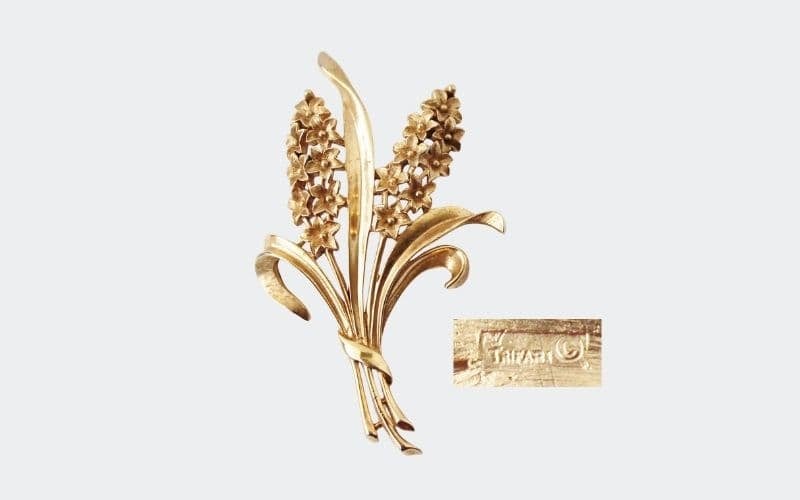
Matte Gold Floral Brooch
c. 1960-70’s
Value: $15-$25
Related Article:
Van Dell
Founder of the Van Dell jewelry company, Angelo del Sesto, was born and raised in Providence, RI, the costume jewelry center of the world. Many jewelry businesses, including Trifari, used companies in Providence to manufacture their products.
Angelo graduated from the Rhode Island School of Design and then worked for a jewelry manufacturer for a number of years, earning several awards for his design work. In 1939 he opened his own jewelry business–Van Dell–producing gold-filled and sterling jewelry, Jewelry ID. Angelo passed in 1992 but the Van Dell name is still in use.
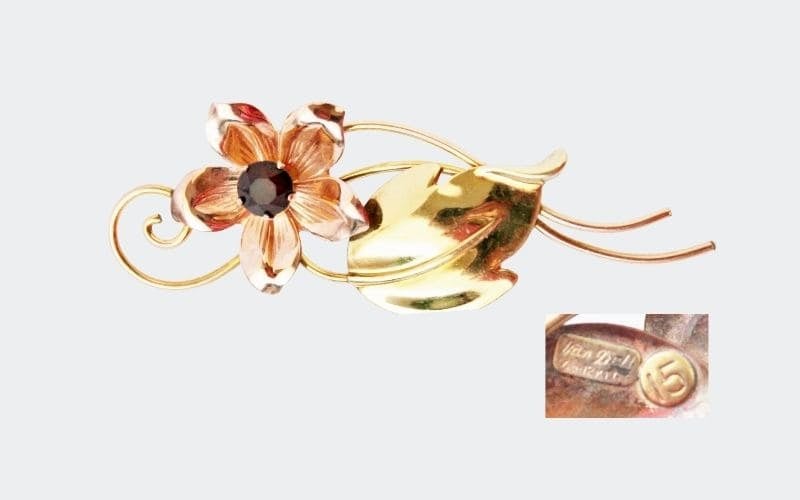
Gold-Filled Floral Brooch w/Rhinestone
c. 1940’s-50’s
Value: $25-$35
Weiss
After learning the jewelry trade while working for Coro, Albert Weiss opened his own company in 1942. He used quality crystals and rhinestones in his products, but since he was a one-man operation, production remained low. The resulting scarcity has resulted in higher values for Weiss jewelry.
While the company closed in 1971, its name continues to be used by the Rhinestone Jewelry Company of NYC.
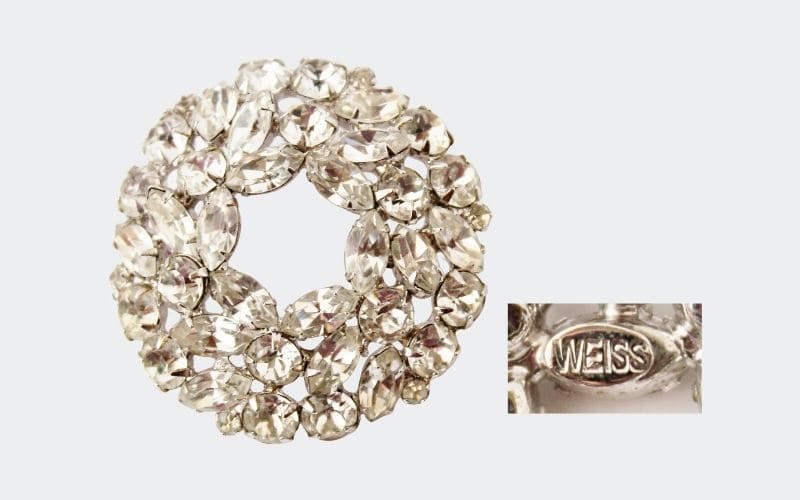
Ornate Clear Rhinestone Circle Brooch
c. 1950-60’s
Value: $30-$40
Silver Plated
Silver plated jewelry, as opposed to sterling silver, falls under the costume jewelry, rather than fine jewelry category.
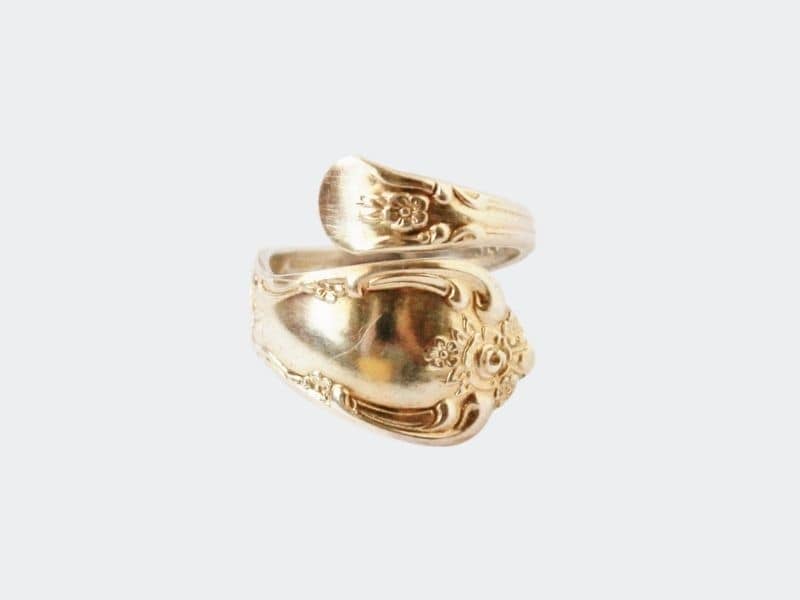
Silver Plated Spoon Ring
c. 1970’s-80’s
Value: $15-20
Related Article:
Wedding
It makes good sense to pick up wedding appropriate jewelry whenever you get the chance since brides are typically willing to pay a little extra for beautiful pieces, whether for themselves, their bridesmaids, or their flower girls.
Sets tend to have an advantage over single pieces. Look for ornate necklace and earring sets featuring faux pearls and/or blingy rhinestones.
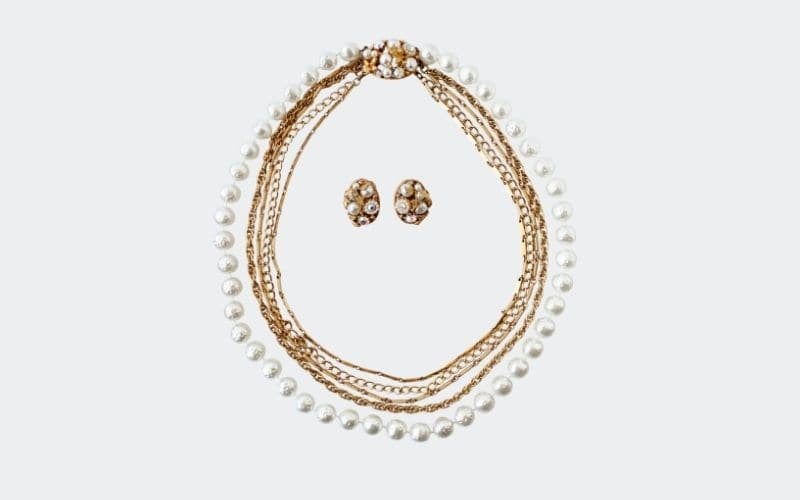
Faux Pearl & Clear Rhinestone Necklace & Earrings
c. 1970’s
Value: $35-$45
What to Look for in Costume Jewelry
When you’re shopping for vintage costume jewelry, you want to look for and purchase quality pieces. That means looking for:
- Beauty
- Sturdiness
- Excellent condition
- Branding
- Prong set gemstones
With all that said, don’t buy an unattractive piece of jewelry simply because it’s branded, but do by a gorgeous piece that ticks several of the boxes but has no mark.
A great way to learn about costume jewelry is to visit a reputable antique shop and ask to look at and handle several pieces. This will tell you a lot about what to look for while you’re out shopping. It’s called, getting an education!
Where to Find Vintage Costume Jewelry
Anywhere you can find vintage or antiques for sale, you can find costume jewelry. Look for higher end pieces at estate sales and antique shops. Look for more reasonably priced pieces at garage sales and flea markets where you can often find things priced for $1 to $2 each.
Heck, I attended a garage sale while visiting my sister in Atlanta and each piece of jewelry was priced at just 25¢each!
I also find that smaller thrift stores, the ones that fund a very specific charity like animals or Vets or trouble teens, have jewelry priced affordably.
Pro Tip: Carry a magnifying loop with you. I’ve found many pieces of Sterling silver, and even some gold, improperly marked. You want to pick those pieces up right away!
Final Thoughts
Buying and selling vintage costume jewelry is a lucrative business; I highly recommend it to both booth and online sellers. A small locked case in a booth doesn’t take up much room and is well worth the effort. There’s for sure money to be made selling costume jewelry!
Thanks for stopping by–
If you enjoyed this post, subscribe today
and get a FREE copy of my eBook:

Bye for now,

Would you pin this to your fave Pinterest board? Thanks!