How to Clean & Care for Fenton Glass
If you’re a fan of Fenton glass, whether as a collector or reseller, it’s important to know how to properly care for these beautiful pieces of glassware. This is especially true for unique pieces like those that are hand-painted and those made of custard glass.
In this guide, I’ll walk you through simple steps that promise to preserve both the beauty and value of your glass without causing any damage. Let’s take a look at how to clean Fenton glass.
Table of Contents
Materials for Cleaning
How to Clean Most Fenton Glass
Cleaning Custard Glass
Cleaning Hand-Painted Glass
Hard Water Stains (Mineral Deposits)
Other Articles You’ll Enjoy
This post contains affiliate links for research materials related to this article. This is both for your convenience as well as to support this website, as I receive a small compensation whenever you click on such a link and make any sort of a purchase, for which I thank you. See my full disclosure here.
Materials for Cleaning
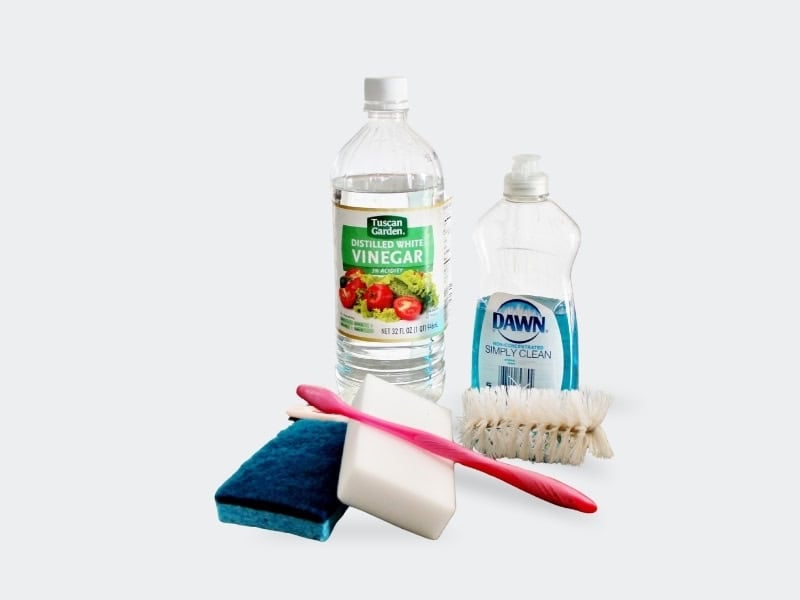
Materials
- Mild dish soap, like Dawn
- Sponge
- Bottle brush and/or an old tooth brush
- Magic Eraser
- White vinegar
How to Clean Most Fenton Glass (& Other Kinds of Glass, Too!)
You can wash most Fenton glass pretty much as you would wash any other kind of glass: with milk soap and water (I use Dawn dish detergent).
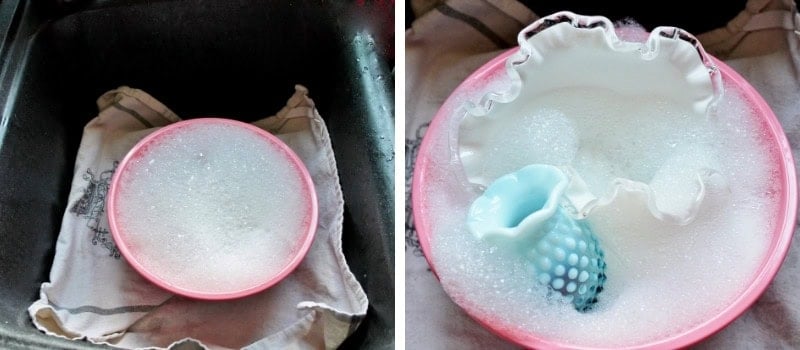
Start by lining your sink with a kitchen towel to prevent breakage should you happen to drop a piece in your sink by accident. And yes, I’ve done that!
Add a plastic bowl to the sink and fill it with a squirt of dish soap followed by some warm (not hot) water. Let your pieces soak for a bit if they have stubborn grime stuck to its exterior or interior surface.
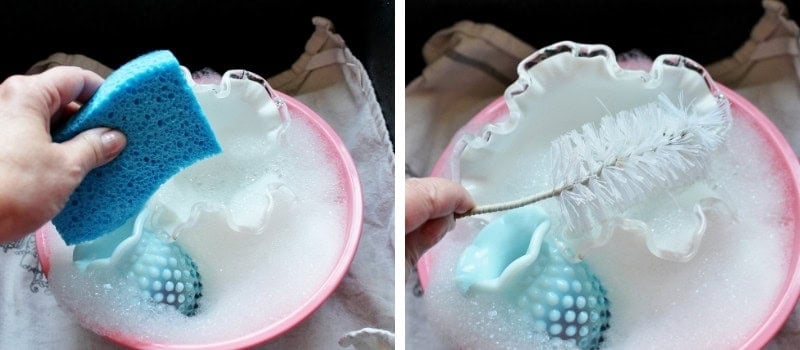
Applying the theory of least invasive to gradually more invasive techniques, first wash each piece with a sponge and then rinse to see how effective that’s been.
If any dirt or grime remain, next use a bottle brush and/or a toothbrush to work on those areas. Hobnail in particular may need some scrubbing with a brush to get between the “bumps.”

Some pieces may need a bit of extra work with a Magic Eraser. Made of melanine foam, these sponges act like extremely fine sandpaper.
“The open-cell structure of melamine foam allows it to lift and trap dirt within its cavities, making it an efficient and chemical-free cleaning tool,” (How Stuff Work).
Other things you can clean with Magic Erasers:
- Wedgwood Jasperware
- Walls (use lightly though because it will ultimately remove paint!)
- Old books (use lightly, works best on glossy finishes)
- Corian sinks
- Skates (old & new)
- Shower doors
- White sneakers
- Plastic outdoor furniture
Dry immediately to prevent water spots.
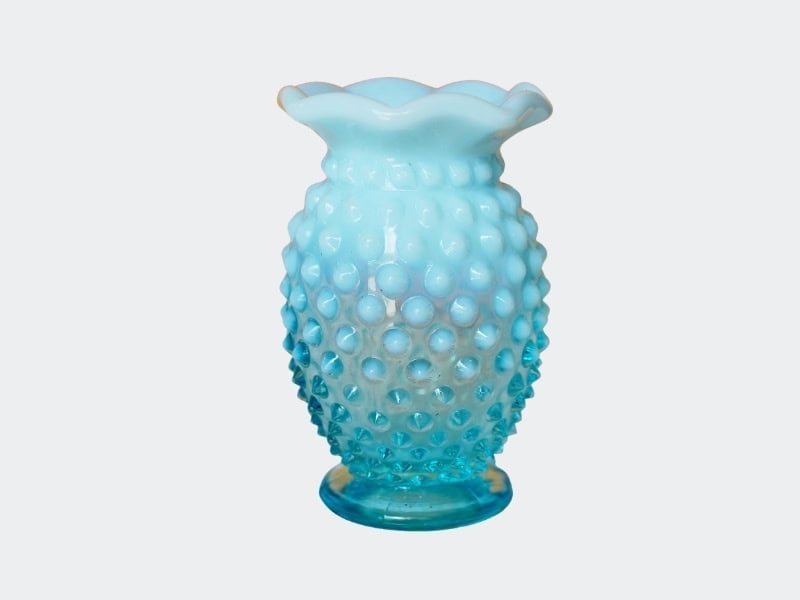
Here’s the hobnail vase in blue opalescent after cleaning.
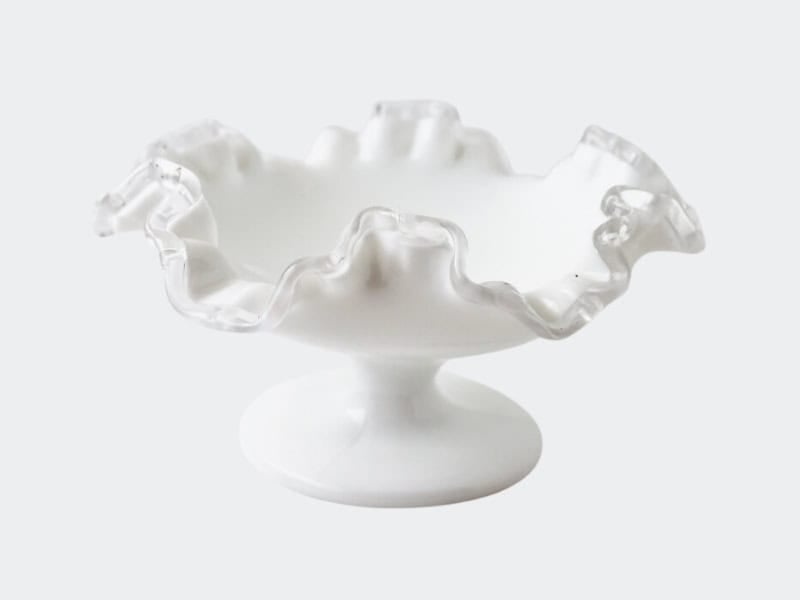
And the Silvercrest piece in milk glass after cleaning
Custard Glass
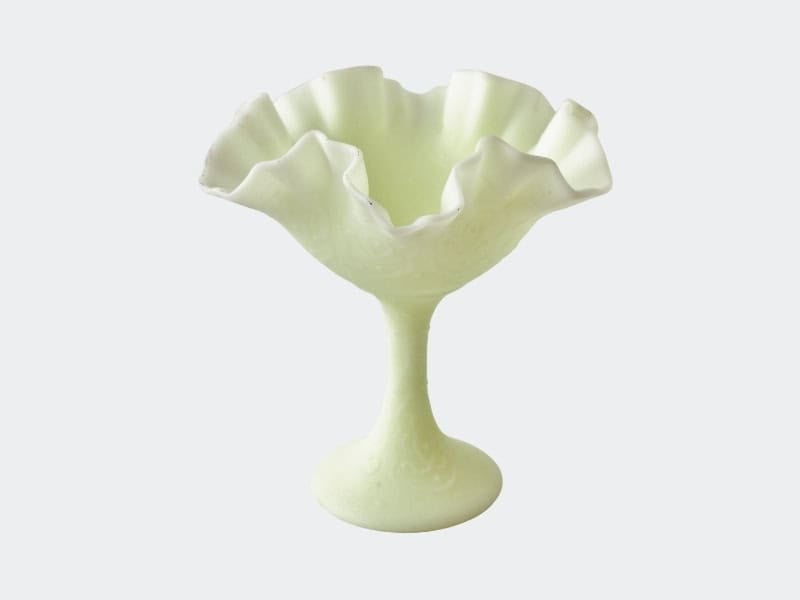
Custard glass in particular may benefit from cleaning with a Magic Eraser. Notably, when found out in the wild, the surface often shows a fair number of black marks that a simple sponge will not remove. But the Magic Eraser displays its magic ability with ease and removes those marks.
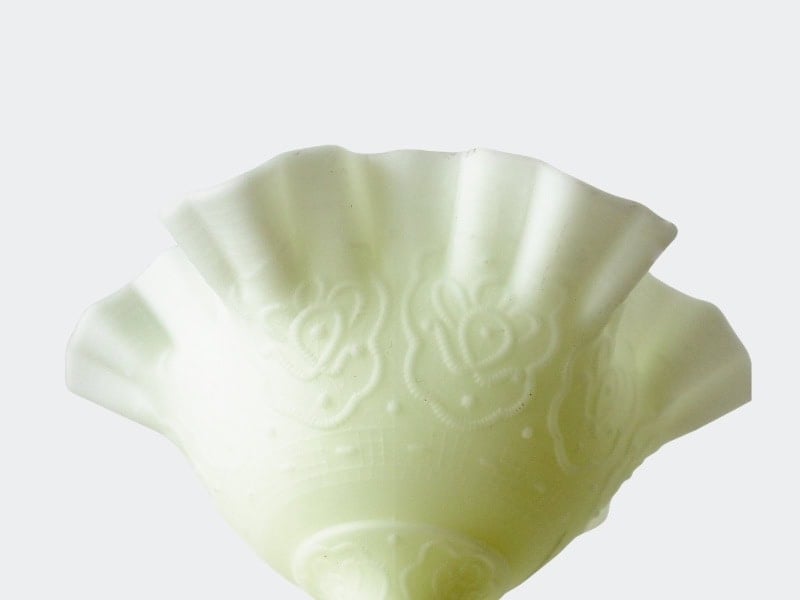
They typically reach those spaces in and around any embossed decoration, as with the “Persian Medallion” design on this yellow custard compote.
Hand Painted Pieces

I was so pleased to learn a few years ago that Fenton both glazed and re-fired its hand-painted pieces. This means that they are safe for light cleaning. NOTE: This does not apply to other types of hand-painted glass so handle those pieces with great care.

You can clean hand-pained Fenton with sudsy water and lightly wipe them with a sponge or cloth, but I would avoid any long soaks and avoid use of a Magic Eraser. The eraser removes microscopic layers of “things” and I’d be afraid of it penetrating through the protective glaze.
Hard Water Stains (Mineral Deposits)
To date I’ve not come across any Fenton glassware that has hard, stuck on water stains caused by mineral deposits; however, after some research, I’ve learned that vinegar is a safe product to use for removal.
Pour a mixture of 50% white vinegar and 50% water into the piece of glass, covering the stained area. Let it sit for 30 minutes, rinse with water and check whether the issue has been resolved. Scrub with the bottle brush and repeat with the vinegar and water solution if necessary.
If some of the stains remain, try wiping with a Magic Eraser. This may remove the remaining deposits. You could try a stronger product like CLR, but I recommend it as a last resort as it is very strong stuff. Use with rubber gloves in a well-ventilated area.
NOTE 1: Do NOT use vinegar on Custard glass as it can hurt its satin finish.
NOTE 2: If any cloudiness remains after treatment, it’s likely that the glass is “etched” (its molecular structure is changed) and it cannot be improved by use of home remedies. Washing in a dishwasher is the number one culprit causing etching on all sorts of glass.
PROTIP: All is not lost! Etched pieces can be displayed and made to look quite beautiful by applying a thin coat of paste wax to the etched surface, letting it dry, then removing any excess and buffing to a satin finish. It makes the etching “disappear”! This also works for display purposes on Pyrex whose exterior has turned “cloudy”.
Final Thoughts
If you’ve wondered how to clean mild or stubborn grime and stains on your Fenton glass, I hope I’ve provided some answers for you, or at least gotten you pointed in the right direction.
Other Articles You’ll Enjoy



Good luck with all of your cleaning efforts!
Thanks for stopping by–
If you enjoyed this post, subscribe today
and get a FREE copy of my eBook:

Bye for now,

I’d love it if you’d pin this image for later!